

Muizzu Announces Major Salary Reductions for Top Officials
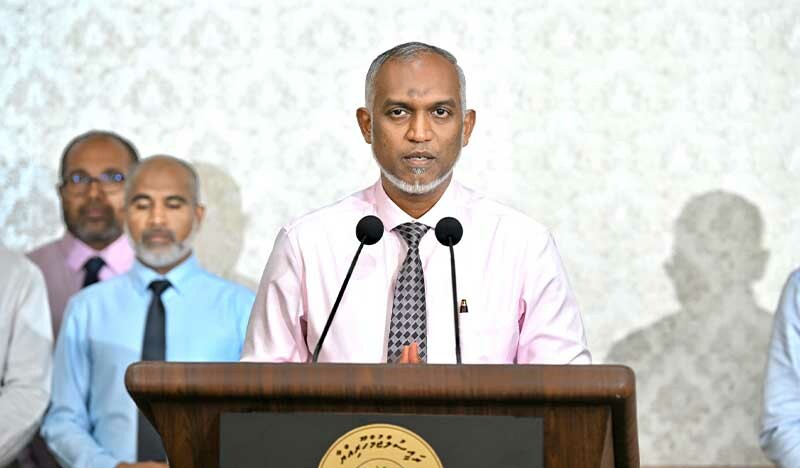
President Dr Mohamed Muizzu has announced a 50 percent reduction in his own remuneration, alongside cuts to the salaries of lawmakers and political appointees.
The measures form part of a broader economic reform plan aimed at addressing fiscal challenges in the Maldives. The changes, which will take effect with the 2025 state budget, include a 10 percent pay cut for political appointees, senior executives of state-owned enterprises (SOEs), and the top officials of independent institutions. These cuts follow Muizzu’s declaration of his commitment to austerity measures to tackle the country’s mounting financial difficulties.
advertisement

In a statement on social media platform X, Muizzu outlined the key components of the plan, which includes:
1. A salary reduction of 10 percent for all politically appointed individuals.
2. A salary reduction of 10 percent for all staff of state-owned enterprises, excluding banks. Consequently, the take-home salaries of heads of these enterprises will be capped at MVR 90,000.
3. A proposition to relevant bodies to reduce the salaries of heads of independent institutions by 10 percent.
4. A proposition to the heads of the Judiciary and Parliament to reduce their salaries by 10 percent.
Under current regulations, the President receives a salary of MVR 100,000 per month. A previous attempt by the former Maldivian Democratic Party (MDP) government to increase this to MVR 120,000 was unsuccessful. With his decision to halve his own pay, President Muizzu will now receive MVR 50,000 monthly.
Lawmakers, who set their own salaries, currently earn MVR 82,500 per month, including committee allowances. The announced cuts come amid mounting pressure on the government to reduce state expenditure. Global financial institutions, including Moody’s and Fitch Ratings, have issued warnings about the Maldives’ ability to manage its debt, leading to credit rating downgrades earlier this year.
These salary reductions follow Muizzu’s earlier decision to eliminate 228 political positions as part of the government’s ongoing cost-cutting efforts.
The reforms represent a significant shift in the Maldives’ approach to public sector spending as the country grapples with financial challenges.