

Maldives Partners with China to Establish Beetle Control Laboratory
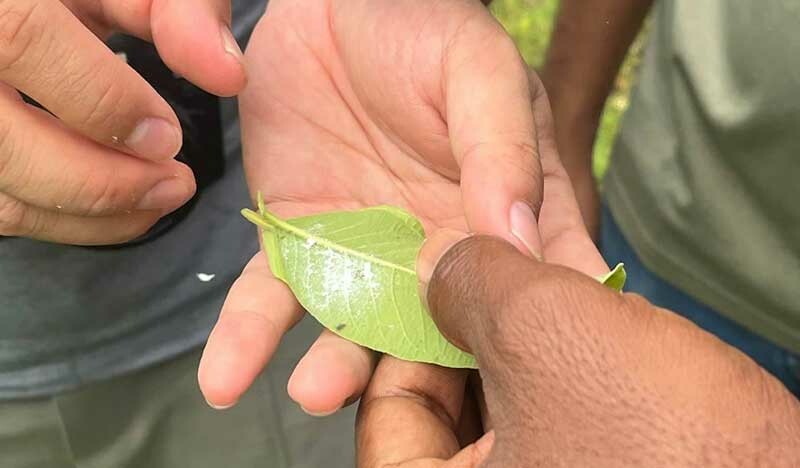
Maldivian authorities, in collaboration with China, have initiated efforts to establish a laboratory aimed at controlling the hispid beetle population, which poses a significant threat to the nation’s coconut palms.
The agreement to pursue this eco-friendly and sustainable solution was formalised during President Dr Mohamed Muizzu’s state visit to China earlier this year. Among the agreements signed was a partnership with the Chinese Academy of Tropical Agricultural Sciences (CATAS) to address the beetle infestation, which has severely impacted the country’s agricultural sector.
advertisement

During their visit to the Hanimaadhoo Agriculture Center, the team from the Chinese Academy of Tropical Agricultural Sciences (CATAS) engaged in insightful discussions, exchanging valuable technical knowledge on biological control management protocols and insect-pest… pic.twitter.com/TqegFAINuO— Ministry of Agriculture and Animal Welfare (@MAAWmv) December 14, 2024
The Ministry of Agriculture and Animal Welfare announced that CATAS has been contracted to provide expertise and training for personnel who will operate the planned facility. The laboratory will specialise in developing parasitoids—organisms used in biological control—to combat the hispid beetle population in an environmentally friendly manner.
A team of four professors from CATAS has already arrived in the Maldives to conduct final research necessary for establishing the laboratory. The team is assisting the government in analysing the designated site and providing technical guidance to expedite the project.
Based on their preliminary findings, the Hanimaadhoo Agricultural Centre has been recommended as the most suitable location for the facility. The recommendation is based on the high population of hispid beetles in the area and the availability of sufficient infrastructure to support the laboratory’s development.
During their visit to Hanimaadhoo, the CATAS team collaborated with technical staff from the Ministry of Agriculture to share knowledge on biological control protocols and insect-plant interactions. In addition, the team, alongside ministry representatives, visited Maafahi in the Haaf Alif Atoll to observe ongoing biological control efforts to manage beetle populations on the island.