

VP Highlights Gov’t’s Focus on Disaster Risk Reduction at Resilient 20 Exhibition
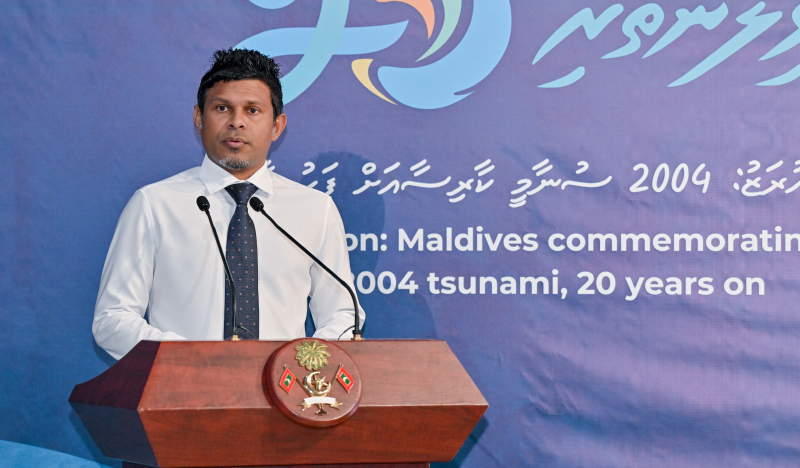
At the Resilient 20 exhibition marking the 20th anniversary of the 2004 Indian Ocean Tsunami, Vice President Hussain Mohamed Latheef emphasised the government’s commitment to disaster risk reduction, highlighting the development of the Maldives’ first Disaster Risk Reduction Strategy under the current administration.
Speaking at the opening ceremony of the exhibition organised by the National Disaster Management Authority (NDMA), the Vice President highlighted that the development of the Maldives Disaster Risk Reduction Strategy early in this administration underscores President Dr. Mohamed Muizzu’s commitment to prioritising the matter in his policy agenda.
In his speech, he spoke about how the Maldives’ recovery from the tsunami and accredited the nation’s resilience to the teachings of Islam and the strength of unity among Maldivians. He acknowledged the sacrifices made in national service by security forces, volunteers, and the general public, who came together to help the nation recover. The Vice President also praised the work of the NDMA, which was established after the disaster to mainstream disaster risk reduction at a national level.
During the ceremony, he launched the Maldives Disaster Risk Reduction Strategy 2024-2030 book, approved by the National Disaster Management Council on December 24th. He also listened to a special song composed for the Day of Unity, toured the Resilient 20 exhibition, and wrote a message in the “Honoring the Lives Lost” segment. The Vice President was later presented with the photo book of the ‘Resilient 20’ exhibition.
advertisement

The 2004 tsunami remains the deadliest disaster in the Maldives’ history, claiming 82 lives and displacing more than 29,000 people across the country. The tsunami struck on December 26, 2004, at 09:23 a.m., leaving a lasting impact on the nation and shaping its approach to disaster preparedness and management.