

Maldives Introduces Underwater Monitoring Technology to Support Reef Conservation
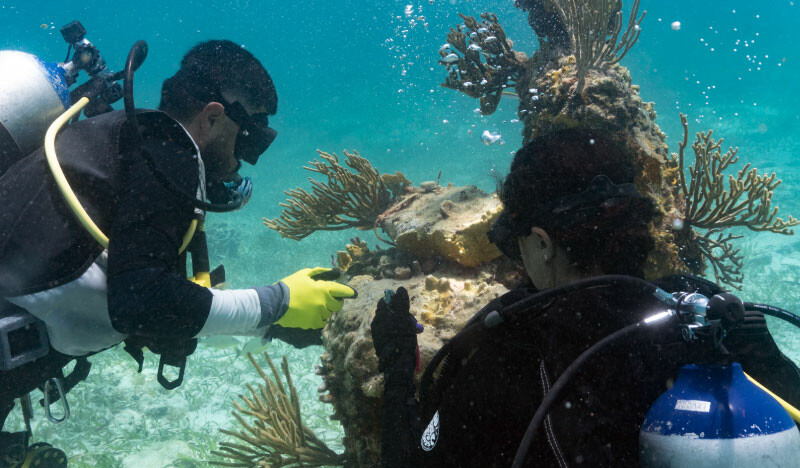
The pilot programme was implemented at the protected reef area of K. Rasfari. | Photo credit: Ministry of Homeland Security and Technology
The government has begun using Passive Acoustic Monitoring (PAM) technology to manage and monitor its underwater environmental systems, following the completion of a pilot programme.
The initiative was conducted under the Digital Maldives for Adaptation, Decentralisation and Diversification (DMADD) project of the Ministry of Homeland Security and Technology, in collaboration with the Environmental Protection Agency (EPA). The pilot trained 17 stakeholders, including representatives from the EPA, Maldives National University (MNU), the Maldives Marine Research Institute (MMRI), and the private sector.
advertisement

advertisement

PAM technology, which has been used internationally since 2010, involves deploying autonomous underwater devices that record marine sounds. The recordings are then analysed using software to assess reef health and track the presence and behaviour of marine species. The technology allows for long-term, cost-effective environmental monitoring without human disturbance, offering advantages over traditional methods, which often require divers and are limited by cost, time, and manpower.
The pilot programme was implemented at the protected reef area of K. Rasfari, where a cargo boat incident in August 2019 caused significant environmental damage. Baseline sound data were collected from the affected site and a nearby control site between 7 and 28 April 2025, as part of the EPA’s “Restore Rasfari” rehabilitation project. Comparing the two data sets is expected to help assess the reef’s recovery.
Speaking at the launch ceremony, Special Envoy for Climate Change Ali Shareef urged government agencies and private entities to share data and collaborate to ensure the sustainable management of the country’s fragile marine ecosystems. He expressed concern that environmental projects often lose momentum after completion and stressed the importance of using the knowledge gained.
DMADD Project Manager Dr Ibrahim Waheed highlighted the importance of utilising the training and technology in reef regeneration efforts nationwide. He noted that including the MNU in the training was a strategic step to build local technical capacity and foster a generation that can apply such tools sustainably.
The training sessions, conducted by marine biologists from Ocean World of Sound—an organisation experienced in using PAM in Mexico’s Meso-American reef system—included practical instruction on deploying and retrieving listening devices, using software to analyse acoustic data, and planning and documenting field activities. Participants also received professional software licences and equipment, which were donated to the EPA.
State Minister for Homeland Security and Technology Dr Mohamed Kinaanath attended the event, along with Permanent Secretary Ahmed Shareef Nafees, Permanent Secretary of the Ministry of Tourism and Environment Ajwad Musthafa, and other senior officials.
Officials hope that expanding PAM technology across other reef systems in the Maldives will provide critical data to support climate adaptation and conservation efforts.