

Dengue Cases Rise Sharply in April, Health Ministry Urges Public to Take Preventive Measures
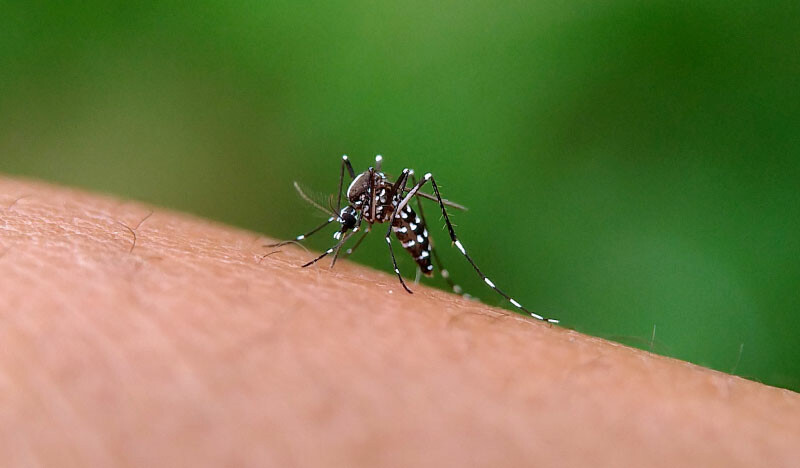
Aedes aegypti mosquito feeding on human skin. | Photo credit: Stock photo
The Ministry of Health has reported a notable rise in dengue fever cases across the Maldives in April 2025, with the highest number of infections recorded in the Malé region, as well as in Raa and Alif Alif atolls.
Officials have urged the public to take immediate and consistent measures to protect themselves against mosquito bites and reduce mosquito breeding grounds, as the Aedes mosquito, responsible for transmitting dengue, remains active primarily during the day but poses a risk throughout the day and night.
advertisement

advertisement

To minimise the risk of infection, the ministry advises individuals to use mosquito repellents containing active ingredients such as DEET, Picaridin (KBR3023 or Icaridin), IR3535, oil of lemon eucalyptus (OLE), para-menthane-3,8-diol (PMD), and 2-undecanone. Residents are also encouraged to wear clothing that covers as much of the body as possible and to use mosquito nets, especially over openings like small doors and windows and within homes.
Additional protective steps include keeping doors closed during peak mosquito hours and ensuring living spaces are safeguarded at all times.
In parallel with personal protection, the ministry stresses the importance of eliminating mosquito breeding grounds. This includes cleaning and emptying water-holding containers such as pots, tanks, and bottles at least once a week, as well as properly disposing of waste and stagnant water in public and construction areas. Larger bodies of stagnant water should be treated with larvicides like Bacillus thuringiensis israelensis (BTI) or temephos, or stocked with small fish that feed on mosquito larvae.
Authorities have reminded the public that even seemingly dry containers previously filled with water may harbour dormant mosquito eggs for over six months. Therefore, thorough cleaning is essential.
The Ministry of Health concluded its advisory by stressing the collective responsibility to control mosquito populations and prevent the further spread of mosquito-borne illnesses like dengue.