

Technical Training Rolled Out to Support Farmers in the Maldives
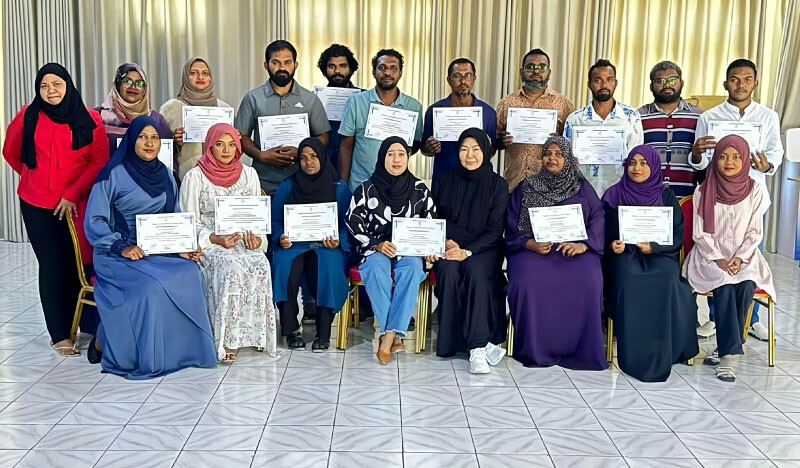
Participants who attended the ongoing technical training programme. | Photo credit: Ministry of Agriculture and Animal Welfare
In an effort to strengthen agriculture, provide equal opportunities, and promote modern farming, technical training is currently ongoing on two islands, with further sessions planned across additional islands, according to the government.
The Ministry of Agriculture and Animal Welfare has announced that the Gender Action Learning System (GALS) programme is currently being implemented in the Maldives as part of the Maldives Agribusiness Programme (MAP). The initiative is a collaboration between the International Fund for Agricultural Development (IFAD) and the Government of the Maldives.
advertisement

advertisement

According to ministry officials, training sessions have already taken place on the islands of Sh. Goidhoo and Sh. Funadhoo. Further sessions are scheduled to be held on HA. Ihavandhoo, HA. Dhidhdhoo, HDh. Neykurendhoo, HDh. Nolhivaram, HDh. Hirimaradhoo, and Sh. Foakaidhoo.
https://t.co/ralnDO7lzm
"ގާލްސް" ތަމްރީންތައް 2 ރަށެއްގައި ކުރިޔަށް، އިތުރު ރަށްތަކުގައި ފެށުމަށް ތައްޔާރުވަނީ@AgriBusinessMV— Ministry of Agriculture and Animal Welfare (@MAAWmv) June 11, 2025
The training programme aims to empower local farming communities by encouraging self-development and equipping participants with the tools needed to succeed in modern agriculture. Participants are guided through a process of envisioning their future, identifying both opportunities and challenges, and formulating actionable strategies to achieve their goals.
In addition to these personal and professional development components, the training also covers practical business knowledge. Farmers learn about essential factors to consider when starting an agricultural business, including the importance of maintaining quality standards in their produce and practices.
The Ministry stated that the broader goal of the initiative is to foster inclusive growth in the agricultural sector by addressing both technical and social aspects of farming livelihoods.