

MJA, MMC Call for Withdrawal of Media Regulation Bill
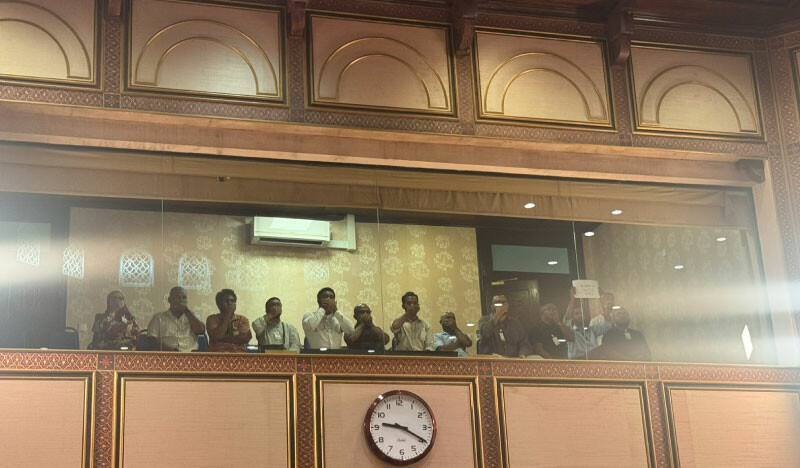
Journalists protesting in parliament while the “Maldives Media and Broadcasting Regulation” bill was debated today, August 19, 2025 | Photo: MP for Kendhoo constituency, Mauroof Zakir’s X account
The Maldives Journalists Association (MJA) and the Maldives Media Council (MMC) have called on the government to withdraw a proposed bill that seeks to tighten state control over the media.
The “Maldives Media and Broadcasting Regulation” bill, submitted to parliament on 18 August by Thulhaadhoo MP Abdul Hannan Aboobakuru, was debated today. This marks his second attempt to restructure media oversight after a previous version was withdrawn following widespread criticism from journalists and the public.
advertisement

advertisement

The government maintains that the bill aims to strengthen independent media, curb misinformation, and establish clearer regulatory frameworks for both journalism and broadcasting. However, the MJA and MMC argue that vague wording within the draft law leaves it open to misuse.
MJA strongly condemns the new Media and Broadcasting Regulation Bill. This bill poses a direct threat to press freedom and seeks to place the media under government control. We call for its immediate withdrawal. #HatharehgeHaggugai #CTRLbillBeyrukurey #CTRLehNukureveyne
Read our… pic.twitter.com/XIv9vKESYK— Maldives Journalists Association (@mjamaldives) August 19, 2025
According to the MJA, the bill centralises authority under the president, creating what it described as a mechanism for government control of the media. The association called the move “the murder of independent journalism”, warning that provisions allowing for the closure of outlets, arrests of journalists, and fines of between MVR 5,000 and 25,000 would create a climate of fear.
The proposed law would dissolve both the Maldives Media Council and the Broadcasting Commission, transferring their responsibilities and resources to a newly created Maldives Media and Broadcasting Commission. The new body would comprise seven members – three appointed by the president with parliamentary approval, and four elected by the media sector. Unlike the current system, its president would be appointed directly by the head of state.
The MMC criticised the proposal as a “complete overhaul” of the existing self-regulatory system and accused the government of attempting to place media under the influence of the ruling party. It said the bill effectively nullifies the independent framework that currently underpins media regulation in the Maldives.
The MJA also condemned the lack of consultation with journalists during the drafting process, describing the bill as politically motivated. The association accused Deputy Speaker Ahmed Nazim of playing a central role in shaping the legislation, despite it being tabled by an independent MP, calling the move “suspicious” and driven by “ulterior motives”.
Both organisations urged lawmakers to reject the legislation, stressing that any new regulatory system must be established by journalists themselves and remain free from political interference.
If enacted, the law would take effect immediately upon publication in the government gazette.