

Parliament Refers Case of Journalists at Committee Meeting to General Purpose Committee
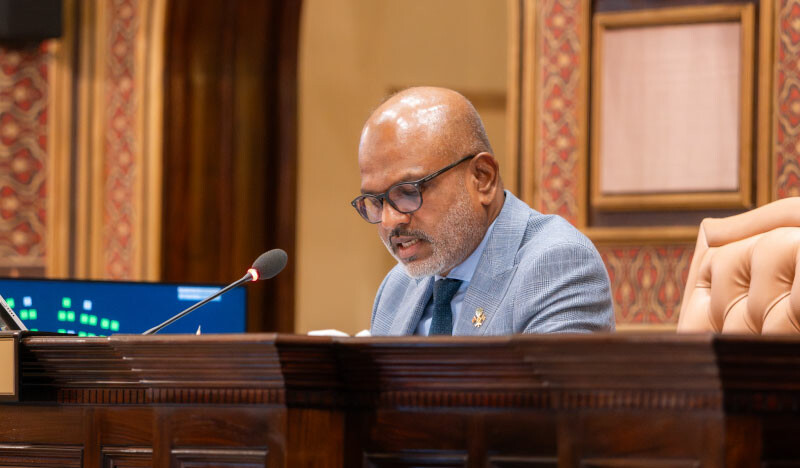
Deputy Speaker Ahmed Nazim at during the parliament’s special session on September 16, 2025 | Photo: Parliament
The Parliament has referred the case of journalists who protested the Committee on Independent Institutions’ review meeting of the Maldives Media and Broadcasting Regulation Bill to its General Purpose Committee.
Deputy Speaker Ahmed Nazim, who chaired yesterday’s special sitting as Speaker Abdul Rahman Raheem was out of the country, announced the decision at the close of the special sitting, noting that the move followed a report from the Sergeant-at-Arms. He said the case was submitted to establish procedures for taking action against those who participate in committee sessions and to address what he described as interference with committee proceedings.
advertisement

Journalists present at the committee’s review meeting on September 10 were escorted out by parliamentary security after being told it was a closed session. Their removal prompted protest from media representatives at the scene.
The announcement came during the special sitting of Parliament held during recess to pass the Maldives Media and Broadcasting Regulation Bill. Demonstrations against the bill took place outside Parliament, later near Hotel Jen, and continued into the evening.
The legislation was passed yesterday despite protests inside the chamber by opposition MPs, who were removed after being named by the Deputy Speaker. Once in force, the bill will establish a seven-member Maldives Media and Broadcasting Commission, with three members appointed by the parliament, two members from broadcasting media, and two members from other media.
While some articles from the initial draft were removed, including provisions allowing investigations into publications up to a year prior to ratification, the bill retains broad investigatory powers.
Journalists, civil society groups, and international organisations have urged the government to withdraw the legislation, warning that it could severely restrict press freedom and public access to information.