


Bill to Regulate Organ Donation Introduced in Parliament
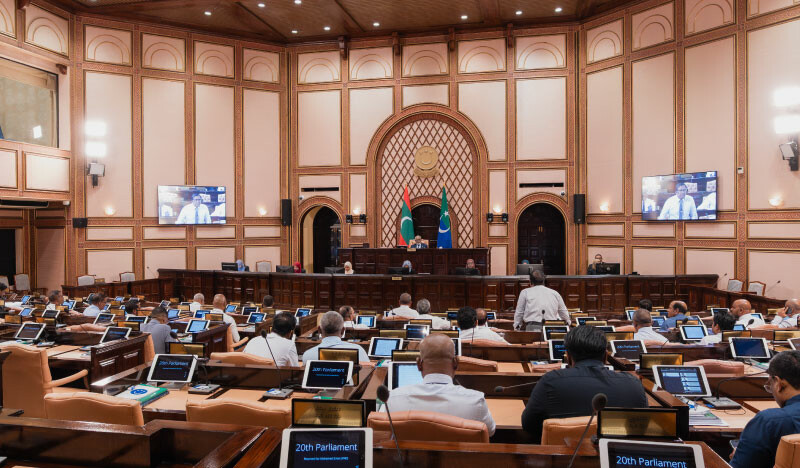
Parliament on October 8, 2025 | Photo: Parliament
A bill to regulate organ donation and transplantation in the Maldives has been introduced to parliament.
The Organ Transplant Bill, proposed by the government and sponsored by MP for South Feydhoo, Ibrahim Did, was introduced during today’s sitting. This bill is the first attempt by the Maldives to regularise organ donation in the country.
advertisement

According to the bill, its purpose is to establish a regulated system for organ transplantation that is safe, lawful, and accessible to all citizens. It seeks to set national standards for transplantation procedures, ensure donor and recipient rights, and prevent the sale or exploitation of human organs.
The bill comprises chapters on the fundamentals of organ transplantation, the rights of donors and recipients, the formation of an Organ Transplant Council and Organ Transplant Organisation Committee, operational standards, offences, penalties, and administrative actions.
Under the proposed legislation, only live organ donations — from one living person to another — are permitted. The bill does not allow organ donation from deceased persons. However, it is common practice in many countries to allow for deceased donation, in which a person who is alive can consent to their organs being donated after they pass.
Donations will be limited to organs that come in pairs, such as kidneys, lungs, and eyes, or organs that can regenerate after partial removal. However, the donation of reproductive organs such as ovaries and testicles will remain prohibited.
Eligible donors must be Maldivian citizens aged 18 or above, mentally fit, fully aware of the medical risks involved, and not under state custody or serving a criminal sentence. Exceptions may be granted to foreign nationals donating to immediate family members, including parents, children, grandparents, grandchildren, or siblings.
The bill also prioritises organ donations between family members. Within 60 days of the law’s implementation, the Ministry of Health will be required to establish an Organ Transplant Committee responsible for approving donations within the country.
To safeguard ethical practices, the bill explicitly criminalises organ procurement without the donor’s consent. Individuals found guilty may face fines ranging from MVR 150,000 to 250,000 and imprisonment for 12 to 18 months. Healthcare providers and institutions found complicit in such acts face higher penalties, with fines of up to MVR 1.5 million and possible imprisonment for up to 24 months.
The sale or purchase of human organs for transplantation purposes is strictly prohibited. Individuals convicted of organ trafficking face fines between MVR 75,000 and 150,000 and imprisonment of 6 to 12 months, with harsher penalties for healthcare professionals and institutions.
If enacted, the Organ Transplant Bill would represent a landmark step in formalising medical transplantation services in the Maldives, ensuring that such procedures are conducted ethically, transparently, and in accordance with international standards.