

Supreme Court Overturns High Court Ruling on Foreign PhD Recognition
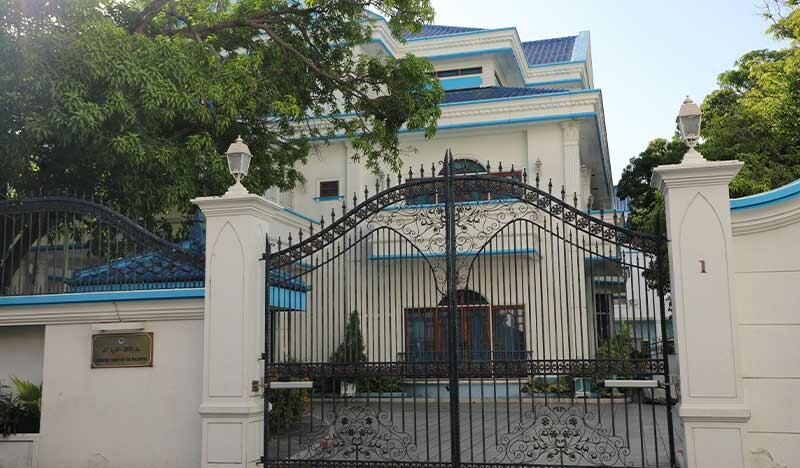
Supreme court of Maldives | Photo: MV+
The Supreme Court has overturned a High Court ruling that required the Maldives Qualifications Authority (MQA) to recognise PhD certificates obtained through a programme linked to Aldersgate College in the Philippines, facilitated by AIMS Business and Information Technology Pvt Ltd (AIMS College) in Sri Lanka.
The case centred on three Maldivian students who enrolled in the PhD programme between 2016 and 2020. The High Court had ruled in 2021 that MQA must recognise their qualifications, stating that the authority had changed its position after the students had already begun their studies.
advertisement

Initially, MQA had granted recognition to the institution and programme, and one student enrolled after receiving written confirmation of recognition from the authority on 28 September 2016. However, in January 2018, Sri Lanka’s University Grants Commission informed MQA that AIMS College was not accredited. In March the same year, the Commission on Higher Education in the Philippines also stated the PhD programme was not accepted under its standards.
Following these notifications, MQA temporarily suspended recognition of the course and advised students to report their status. Later in 2018, the authority decided it would consider validating the qualifications of students who had enrolled prior to January 2018, provided they met Maldivian academic criteria. The students completed the programme, with the final student finishing in November 2020.
However, in March 2021, MQA reversed its position and formally announced it would not recognise the PhD qualifications, including in cases where initial recognition letters had been issued. The students challenged the decision at the Civil Court, which ruled against them. They then appealed successfully to the High Court before the state took the matter to the Supreme Court.
In its judgment, the Supreme Court stated that while MQA had issued a recognition letter, it had done so without adequate due diligence at the time. The court held that a qualification cannot be automatically validated solely on the basis of a recognition document, particularly if the document was issued beyond the authority’s legal scope or before necessary verification procedures were completed.
However, the court also determined that the student who began the PhD after receiving MQA’s written recognition should be compensated for losses caused by the later refusal to accept the qualification. It ruled that the High Court must now conduct a review to determine the extent of compensation. The remaining two students, who were not issued recognition letters, are not eligible for compensation.