

Male’ Has Never Belonged to Any Specific Group, Says Nasheed
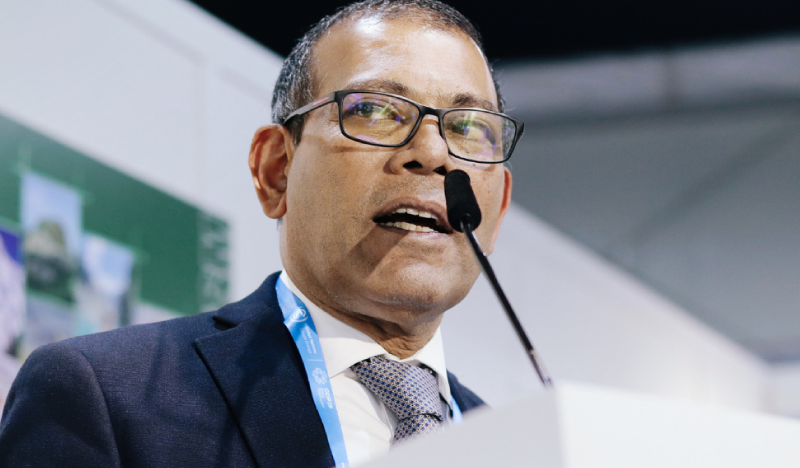
Photo: Climate Vulnerble Forum
Former President Mohamed Nasheed has said that Malé has never belonged to any particular group, emphasising that the capital has always been home to people of diverse origins.
In a social media post, Nasheed reflected on the city’s long history of diversity, stating that if a census had been conducted in the 1750s, it would have shown “people from different nearby countries and nearby islands.”
advertisement

advertisement

Furthermore, he added that in those times, Male’ people were mostly Africans, Malabaris, Turks, and other various ethnicities.
Nasheed also reiterated that the most effective method for allocating land in Malé was through the “Veshifahi Malé” programme, which was introduced during his presidency. The initiative encouraged residents to voluntarily hand over inherited plots to the state in exchange for new flats or land elsewhere, facilitating redevelopment in the densely populated capital.
Nasheed said that land distribution should continue following the same principles used in the “Veshifahi Malé” programme, where those who surrendered their ancestral plots were provided with alternative housing or land. However, he noted that no recent efforts have been made to reclaim or manage such lands for government redevelopment.
“Binveriya Programme”, launched under the previous Maldivian Democratic Party (MDP) government, also grants land to eligible citizens. Under its current agreements, recipients are given five years from the date they receive their new plots to vacate their existing ones.
Nasheed’s remarks come amid ongoing public discussion about housing and land distribution policies in the Maldives, as the government continues to face challenges stemming from limited space and rapid urban growth in Malé.
MDP is facing fresh criticism over its decision to grant free land plots to Malé-registered residents during the final days of former President Ibrahim Mohamed Solih’s administration. The policy, introduced as Solih campaigned for a second term, has drawn accusations of political favouritism and economic inequality.