

Amendments to Evidence Bill Aim to Improve Access to Justice, Says Deputy Speaker
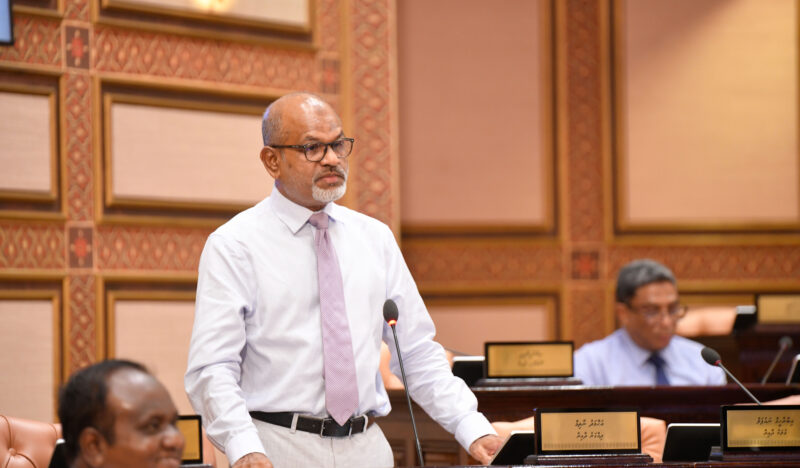
Deputy Speaker of Parliament Ahmed Nazim has stated that proposed amendments to the Evidence Bill are designed to eliminate barriers to justice and address shortcomings in the current law.
During parliamentary debate on the government-sponsored amendment to the Evidence Act, submitted by Biledhdhoo MP Ahmed Aslam, Nazim emphasised that technological advances are changing the nature of evidence, and the legal framework must adapt accordingly.
advertisement

Nazim, who represents the Dhiggaru constituency, pointed to growing challenges in verifying digital and documentary evidence. He cited an increase in certificate forgery cases, as examples of the evolving landscape that the legislation must address.
Referring to the case involving the assault on former Prosecutor General Hussain Shameem, Nazim claimed that the suspects were acquitted because discrepancies in CCTV footage timing meant it could not be accepted as reliable evidence. He added that current procedures do not provide a mechanism to confirm or disprove falsified evidence, leaving courts with limited tools to assess authenticity.
“The deficiencies in the existing Evidence Act make it difficult for courts to evaluate evidence effectively, and that can lead to the acquittal of offenders,” Nazim said.
The current Evidence Act, enacted in 2023, drew strong criticism from journalists and media advocates, who argued that it undermined press freedom. Despite revisions made by the previous administration before the law’s passage, many media representatives maintained that the final version weakened protections for journalists.
Nazim assured that the government’s proposed amendments would resolve those concerns, signalling that the reforms would strike a better balance between upholding justice and safeguarding media freedom.