

Google Announces Dhivaru Subsea Cable Linking Maldives
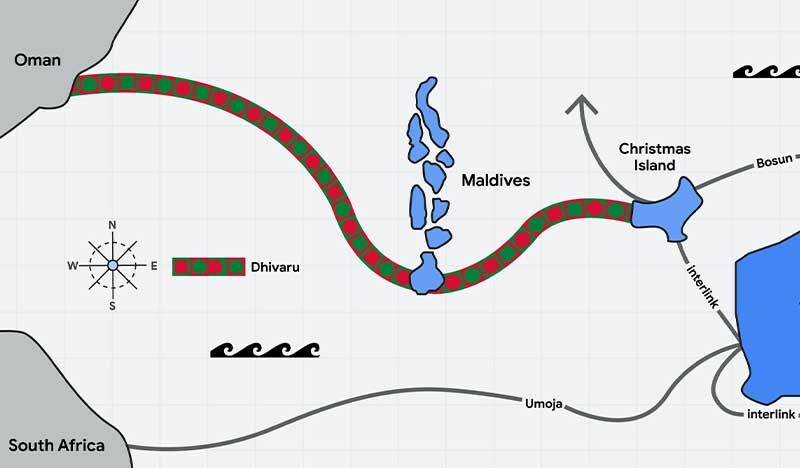
Google has announced Dhivaru, a new Trans-Indian Ocean subsea cable system that will connect the Maldives, Christmas Island and Oman. This investment will build on the Australia Connect initiative, furthering the reach, reliability, and resilience of digital connectivity across the Indian Ocean.
Reach, reliability and resilience are integral to the success of AI-driven services for our users and customers. Tremendous adoption of groundbreaking services such as Gemini 2.5 Flash Image (aka Nano Banana) and Vertex AI, mean resilient connectivity has never been more important for our users. The speed of AI adoption is also outpacing anyone’s predictions, and Google is investing to meet this long-term demand.
advertisement

advertisement

“Dhivaru” is the line that controls the main sail on traditional Maldivian sailing vessels, and signifies the skill, strength, and experience of the early sailors navigating the seas.
In addition to the cable investment, Google will be investing in creating two new connectivity hubs for the region. The Maldives and Christmas Island are naturally positioned for connectivity hubs to help improve digital connectivity for the region, including Africa, the Middle East, South Asia and Oceania.
The Government of Maldives welcomes Google’s investment, which strengthens our digital capabilities and drives economic growth while elevating the Maldives’ position in global technology and digital trade.
ގޫގުލް އިން ދިވެހި ރާއްޖޭގައި ބޮޑު އިންވެސްޓްމަންޓެއް ކުރުމަށް ނިންމި… pic.twitter.com/6siydmSdiX— Ministry of Economic Development and Trade (@MoEDmv) November 17, 2025
The President Dr Mohamed Muizzu said “Google’s decision to invest in the Maldives is a strong signal of confidence in our country’s stable and open investment environment, and a direct contribution to my vision for a diversified, inclusive, and digitized Maldivian economy. As the world moves rapidly toward an era defined by digital transformation and artificial intelligence, this project reflects how the Maldives is positioning itself at the crossroads of global connectivity — leveraging our strategic geography to create new economic opportunities for our people and to participate meaningfully in the future of the global economy.”
Google’s decision to invest in the Maldives is a strong signal of global confidence in our stable, transparent, and investor-friendly environment. This landmark project drives forward my vision for a diversified, inclusive, and digitally empowered Maldivian economy, positioning…— Dr Mohamed Muizzu (@MMuizzu) November 17, 2025
Ooredoo Maldives CEO and Managing Director Khalid Al Hamadi said the initiative strengthens national digital infrastructure and supports the next phase of digital transformation. He said the development will create new opportunities for sectors such as tourism through improved connectivity and expanded digital services.
“We are delighted to partner with Google on this landmark initiative to establish a new connectivity hub in the Maldives. As a leading digital provider, Ooredoo Maldives continues to expand world-class connectivity and digital services nationwide." – Ooredoo Maldives CEO and MD,…— Ooredoo Maldives (@OoredooMaldives) November 17, 2025
Dhiraagu CEO and Managing Director Ismail Rasheed said the company has invested in subsea cable systems for many years and will partner with Google to establish a new connectivity hub in Addu City. He said the collaboration enhances the reliability and resilience of the national digital ecosystem.
"Dhiraagu is committed to advancing the digital connectivity of the Maldives and empowering our people, communities, and businesses. Over the years, we have made significant investments in building robust subsea cable systems — transforming the digital landscape — connecting the…— Dhiraagu (@Dhiraagu) November 17, 2025
Google stated the connectivity hubs are designed to support cable switching, content caching and colocation. Cable switching is intended to improve resilience by reducing the distance data must travel before it can be re-routed in the event of a fault. Content caching will allow frequently accessed content to be stored locally, helping to lower latency. Colocation facilities will offer shared infrastructure for carriers and local companies in locations where access to high-quality data centres is limited.
The company said the hubs will require significantly less energy than traditional data centres, as they are focused on networking and localised storage rather than the intensive power demands of AI and cloud services. Google added that where power availability is limited, it is assessing ways its energy needs could support local investment in sustainable energy generation.
Google stated that the connectivity hubs in the Maldives and Christmas Island will strengthen internet resilience across the Indian Ocean region and support economic development. The company said additional subsea cable projects and connectivity hubs will be announced in the future.