

ACC Announces Completion and Publication of Social Audit on Two Development Projects
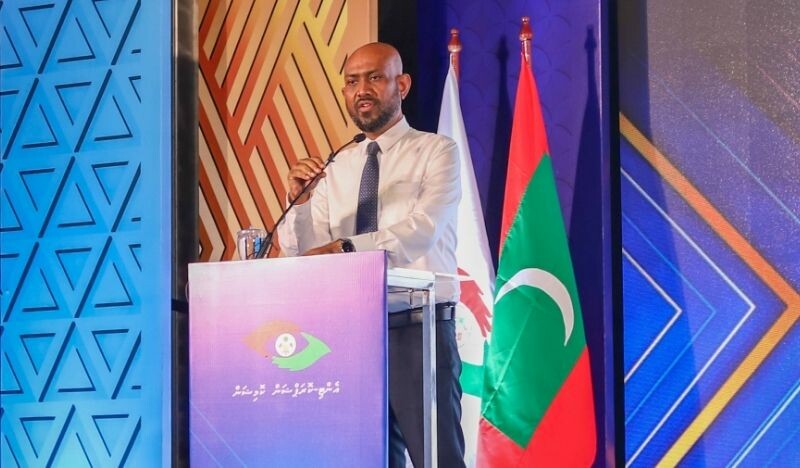
ACC releases social audit findings from Hoarafushi and Funadhoo for Anti-Corruption Day 2025 | Photo: ACC
The Anti-Corruption Commission (ACC) has released the findings of its latest social audit, conducted in HA. Hoarafushi and SH. Funadhoo, to mark International Anti-Corruption Day 2025.
The audit assessed two major PSIP projects: the construction of the Hoarafushi Hospital and 15 classrooms at Funadhoo School, carried out with support from the European Union and UNDP under the Accountability and Integrity Matters Project.
advertisement

During the ceremony, Uz. Adam Shamil, President of the Anti-Corruption Commission, presented key highlights of the Commission’s work. #IACD #accmv pic.twitter.com/V9xBnnNHko— ACC-MALDIVES (@ACC_Maldives) December 9, 2025
The report highlights significant issues in both projects, including delays, limited institutional coordination, and gaps in transparency. Stakeholders also reported limited access to project information and unclear channels for raising concerns or complaints.
It was also noticed that coordination among ministries, councils, schools, and contractors is essential for effective oversight. The report also emphasized the need for proactive information disclosure, stronger monitoring mechanisms, and mandatory verification of technical and safety standards.
The ACC noted that social audits remain an important tool for promoting transparency and public participation in development projects. Furthermore, it reaffirmed its commitment to strengthening accountability and ensuring responsible management of public resources. The social audit report is published on the commission’s website.
ACC Launches Guidelines on Handling Conflicts of Interest
The guideline issued by the commission outline international principles and standards for minimizing conflicts of interest in the decisions and actions of public officials.
The purpose of the directive is to provide guidance on specific situations where conflicts of interest may arise, to identify and address them according to policy, and to promote a culture of integrity and accountability within the institution. The directive also aims to advise institutions on reducing corruption.
The guideline provides instructions on handling conflicts of interest, raising employee awareness, and training to minimize conflicts of interest. It also sets out the procedures to follow when monitoring and reviewing such systems. The guideline specifies the necessary measures and standards that should be implemented within the administration to establish a transparent and trustworthy system for the public. The guideline on how to handle conflicts of interest is published on the commission’s website.
Maldives Anti-Corruption Academy to Launch Training Programmes
The Maldives National Anti-Corruption Academy (MNACA) is set to launch its first training programmes by the end of January, marking a key step in strengthening the country’s fight against corruption.
ACC Chairman Adam Shami highlighted the financial impact of corruption, stating that the ACC has formally informed relevant state institutions that the government has lost USD 103.8 million in assets and funds to corruption over the past 17 years.
He stressed the importance of establishing a strong system to recover state property and funds lost to corruption and noted that a robust framework for asset recovery requires dedicated legislation.
A draft asset recovery law has been prepared and submitted to the Attorney General’s Office, with expectations for enactment within the coming year.
Shamil also pointed to the lack of trained investigative personnel as a major challenge in effectively probing corruption cases.
Shamil confirmed that MNACA now has sufficient staff to begin operations. The immediate goal is to establish an Maldives Qualification Authority (MQA)-recognised anti-corruption investigation course, with certificate and diploma programmes expected to commence before the end of January 2026.
In collaboration with the Malaysian and Hong Kong Anti-Corruption Academy, MNACA will initially offer Level 4 certificate courses and diploma programmes, with plans to expand its offerings to include Master’s degree programmes in the future.