

Two in Five Maldives Residents to Be Foreigners by 2062, Population Study Finds
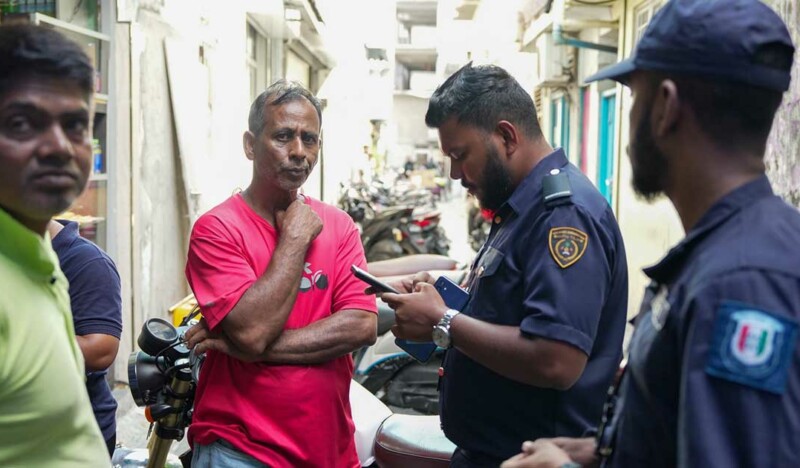
Operation against illegal immigrants nets 81 in Male’ | Photo: MPS
By 2062, two in every five people living in the Maldives will be foreign nationals, according to population projections released by the United Nations Population Fund (UNFPA) and Maldives Bureau of Statistics.
The joint study shows that foreigners accounted for 30 per cent of the Maldives’ population in 2022. With a steady rise in the foreign population and a declining growth rate among Maldivians, this share is projected to increase to 39 per cent by 2062, meaning foreigners would make up nearly two-fifths of the country’s residents.
advertisement

advertisement

In 2022, foreign men outnumbered Maldivian men by 17,000 in the 25–29 age group. By 2062, this gap is projected to widen, reaching 40,000 in each of the key working-age groups.
Read more on Population Projections Summary https://t.co/qf7WaX89Hd@UNFPAMaldives… pic.twitter.com/HaupCnVDwm— Statistics Maldives (@statsmaldives) December 25, 2025
Foreigners In The Workforce To Outnumber Maldivians By 40,000
The report highlights significant changes in the working-age population. In 2022, foreign men already outnumbered Maldivian men in the 25 to 39 age group, including a gap of around 17,000 in the 25 to 29 age bracket. By 2062, the study projects this difference to widen substantially, with an estimated 40,000 more foreign men than Maldivians in each of these age groups.
Overall population figures are also expected to rise. By 2062, the Maldives’ resident population is projected to reach 678,024, comprising about 414,679 Maldivians and 263,345 foreign residents.
Elderly Citizens, Adult Population To Dominate In The Coming Decades
The study further points to rapid ageing within the Maldivian population. It notes that adults and elderly citizens will make up a larger share of the population in the coming decades and are expected to live longer, resulting in multiple age groups co-existing for extended periods.
Demographic shifts between Malé and the atolls are also anticipated. As internal migration to the capital continues, the report projects that a growing proportion of elderly residents will remain in the atolls, alongside fewer children and young people. Malé, meanwhile, is expected to host the majority of the country’s youth population.
At the same time, the number of children is set to decline sharply. By 2062, the number of children eligible for pre-school is projected to fall to 13,648, with similar reductions forecast across other school-age groups, signalling long-term implications for education planning and social services.