

Untreated Sewage, Rising Waste and Diesel Dependence Threaten Malé’s Sustainability, Study Finds
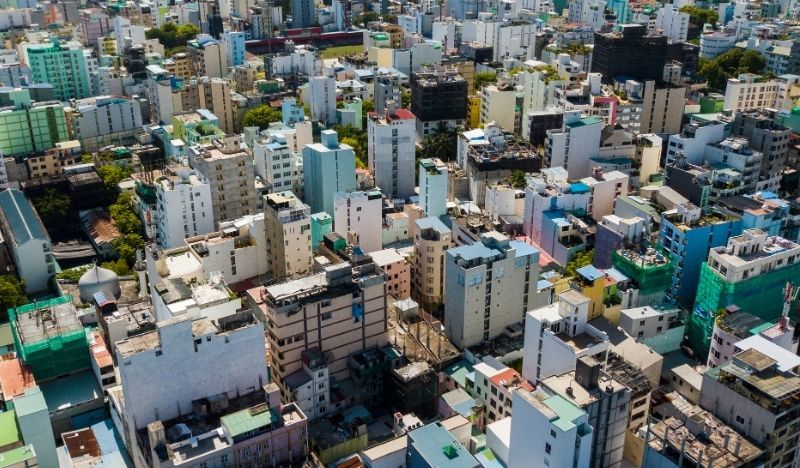
Aerial view of Male’ City. | Photo: MV+
Untreated sewage discharged into the sea, mounting solid waste and heavy reliance on diesel-powered electricity are undermining the long-term sustainability of Malé, according to a new joint study by the Malé City Council, the United Nations Economic and Social Commission for Asia and the Pacific (ESCAP), and Local Governments for Sustainability (ICLEI).
Untreated sewage discharged into the sea
Untreated sewage released directly into the ocean remains one of the most serious environmental threats facing Malé, according to the study.
advertisement

advertisement

It estimates that around 15,000 cubic metres of largely untreated sewage are discharged into the sea every day. While all households in Malé are connected to the sewerage network, the system lacks functional treatment facilities. Developed in 1988, the network continues to operate with outdated infrastructure, and most standalone sewage treatment plants are either non-functional or not connected, resulting in untreated wastewater being released through marine outfalls.
High sanitation coverage, but no wastewater treatment
Despite the absence of treatment, Malé has near-universal access to sanitation and water services. All households are equipped with toilets connected to the sewerage system, with 51 per cent having two toilets, 22 per cent three toilets, and 21 per cent one toilet.
Access to showering facilities stands at 99.8 per cent, significantly higher than the national average of 53 per cent, largely due to the exclusive use of desalinated water in the capital. However, the study notes that there is no reliable data on the proportion of wastewater safely treated, highlighting major gaps in urban water quality monitoring and reporting.
Solid waste sent to Thilafushi amid limited recycling
Solid waste generated in Malé is transported to Thilafushi, where only limited segregation and processing take place before disposal in a landfill. The study finds that waste management challenges are unlikely to ease unless waste reduction and recycling practices improve, as the island city lacks space to manage growing waste volumes.
Recycling in the Maldives remains minimal due to limited financial and technical capacity. While recyclable materials are collected and exported—about 7,277 metric tonnes worth over MVR 50 million were exported in 2014—very little waste is recycled domestically. Manual segregation carried out in Thilafushi remains the primary form of recycling.
Heavy reliance on diesel for electricity
The capital’s electricity supply continues to depend largely on diesel generators, contributing to emissions and increasing financial pressure on government budgets through rising power subsidies. The study identifies diesel dependence as a key sustainability concern, noting the absence of large-scale grid alternatives.
Although the national government has begun investing in renewable energy, including solar and waste-to-energy projects, progress remains gradual. Plans linked to the expansion of Velana International Airport include a shift towards renewable energy, particularly solar power.
Calls for resilient and inclusive urban services
To address these challenges, the study urges the Malé City Council to strengthen water and wastewater infrastructure planning and to integrate climate resilience and equity into service delivery. Recommendations include piloting renewable energy-powered desalination systems, promoting rainwater harvesting in public buildings and spaces, and reducing plastic pollution by phasing out bottled water use in council offices.
The report also calls for inclusive, gender-responsive designs in public sanitation facilities, in line with World Health Organization guidelines, to ensure safe and accessible services for women and persons with disabilities.