

Family-Centred Housing Policy Key to Reducing Inequality, Minister Says

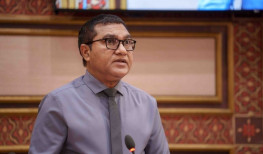
Minister for Construction, Housing and Infrastructure Dr Abdulla Muththalib, at a press. conference held at the President’s Office on December 28, 2025 | Photo: President’s Office
Minister for Construction, Housing and Infrastructure Dr Abdulla Muththalib said the government’s current housing programmes prioritise families, as housing demand arises from households rather than individuals, with eligibility assessed at the household level to ensure no family is left without a basic foundation for dignity and long-term stability.
In a LinkedIn post published yesterday, Minister Muththalib responded to public concerns regarding the Aailee Boahiyavahikan Programme, applications for which opened on Sunday, 18 January. He said the programme is designed to address housing insecurity by focusing on household-level access rather than individual property ownership.
The ministry has set separate deadlines for each component of the programme. Applications for residential land plots will close on 4 March 2026, after a 45-day application period, while applications for flats will remain open until 17 April 2026, allowing a three-month window. Applications can be submitted online through the official portal.
Minister Muththalib acknowledged concerns about eligibility, particularly in cases where an applicant’s spouse already owns property. He said families in which the applicant or spouse owns a one-bedroom or two-bedroom apartment may still apply if they have children under the age of 18. He also addressed concerns where a spouse owns a land plot larger than 400 square feet in the Greater Malé Region.
“Public housing policy exists for one reason: to ensure no family is left without a basic foundation for dignity and stability. Housing is not a bonus to be optimised. It is the starting point for everything else—education, health, employment, and social cohesion,” Minister Muththalib said.
He explained that households with no home or land face the highest level of vulnerability, lacking long-term security and protection against displacement or rising costs. In contrast, families with some form of housing access, even if limited or shared, face a fundamentally different level of risk.
According to the minister, the Aailee Boahiyavahikan Programme follows a principle of prioritising families with no housing or land before those with existing access. He stressed that prioritisation in this context is a matter of responsible public policy rather than discrimination.
Minister Muththalib said the eligibility criteria are not permanent and will evolve as housing supply increases. As the government delivers more social housing units, land plots, affordable ownership schemes and private-sector housing, pressure on public housing will ease and guidelines will be reviewed.
“This is not about exclusion. It is about protecting those at greatest risk first,” he said.