

Over Half of IGMH Emergency Visits Could Be Avoided, Says Health Minister
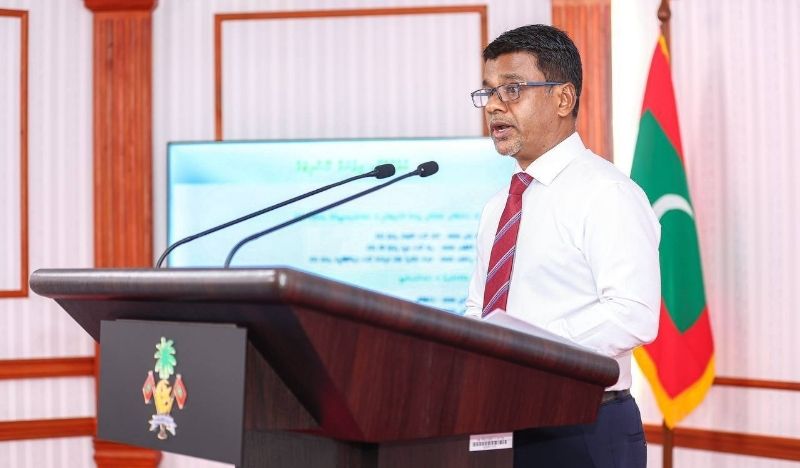
Minister of Health Abdulla Nazim Ibrahim during a press conference in the President’s Office on January 5, 2026 | Photo: President’s Office
Minister of Health Abdulla Nazim Ibrahim has said that more than half of the roughly 500 daily visits to the emergency department at Indira Gandhi Memorial Hospital (IGMH) could be resolved without patients needing to visit the hospital.
Speaking on the seventh episode of the podcast Tharujamaanaa Eku (“With the Spokesperson”), Minister Nazim explained that the government’s plan to establish General Practitioner (GP) clinics across the Malé area is intended to encourage Maldivians to consult a GP before seeking specialist care.
advertisement
Minister Nazim explained that a major challenge in the Maldivian healthcare sector is the long waiting times for specialist consultations. Many patients currently book appointments directly with high-demand specialists, which places a strain on resources and time. Establishing a system where patients first consult a GP is intended to help determine whether a specialist referral is necessary.
The government has opened one GP clinic in Malé, with the intention of opening six in the Malé area before the current administration is over, he said. This includes the renovation of the existing Dhamanaveshi clinic and a new facility in Hulhumalé. The clinics will provide services such as vaccinations, nicotine cessation programmes, and mental health support, including counselling and referrals to psychiatrists where necessary.
“For example, over 500 cases that the emergency department at IGMH sees daily, over half of them could be concluded without a visit to the emergency department,” Minister Nazim said.
The system is designed to prioritise critical care resources for patients who genuinely require them, ensuring that emergency and specialised services are used efficiently, he said.
The minister added that strengthening the GP system is essential for improving overall healthcare efficiency.
“Without this system, we won’t be able to bring our health care to the level we want. We can’t fix it just by investing in services, adding machinery, or building infrastructure. The entire system needs to be strengthened, and people need to understand and adapt to this approach,” he said.
He also emphasised that the initiative aligns with global healthcare practices, where patients typically meet with a GP first before consulting a specialist.
Nazim said the concept of “a doctor for every family” does not imply a separate doctor for each household, but rather accessible primary care services for all, aimed at improving efficiency and reducing overall costs to the health system.