

ADB Projects Sharp Slowdown in Maldives Economy Amid Middle East Tensions
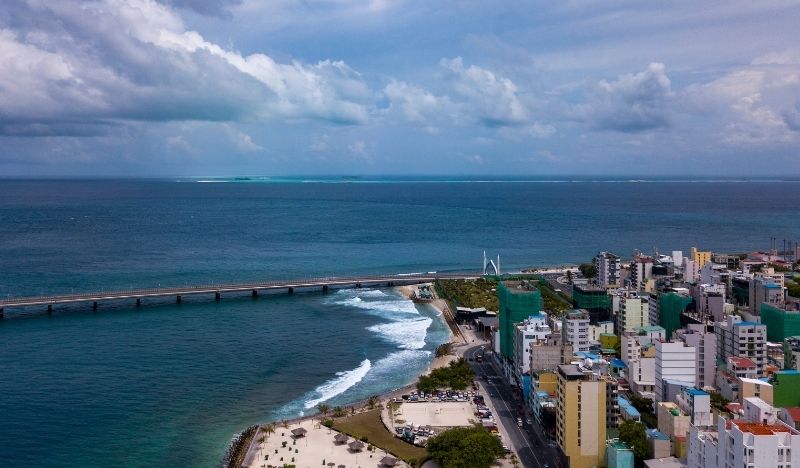
ADB warns geopolitical tensions to slow Maldives economy | Photo: MV+
The Asian Development Bank (ADB) has projected a significant slowdown in the Maldives’ economic growth this year, citing ongoing geopolitical tensions in the Middle East as a key factor affecting the country’s outlook.
According to the latest Asian Development Outlook, the Maldivian economy is expected to grow by just 1.0 per cent this year, a steep decline from the 5.4 per cent growth recorded last year. The slowdown is attributed to mounting pressures on the tourism sector, rising fuel costs, and increasing strain on public finances, all linked to instability in the Middle East.
Elevated geopolitical tensions have driven global oil prices higher, increasing import costs for the Maldives. As a result, inflation is projected to rise to around 5.0 per cent this year, leading to a broader increase in the cost of living and placing additional pressure on household incomes.
In the tourism sector, the opening of the new passenger terminal at Velana International Airport supported a 10 per cent increase in tourist arrivals last year. However, total bed-night figures declined compared to the previous year. While tourist arrivals are expected to continue growing this year, the pace of expansion is forecast to moderate due to geopolitical uncertainty, with the report noting that tourism performance would likely have been stronger in the absence of these external disruptions.
The Maldives’ external position continues to face vulnerabilities, with foreign exchange reserves under pressure. Although the current account deficit improved last year due to stronger tourism receipts and reduced imports following the suspension of several infrastructure projects, reserve levels have weakened again after the recent repayment of a USD 500 million sukuk, reducing the country’s capacity to absorb external shocks.
On the fiscal front, the budget deficit narrowed last year due to lower capital expenditure, but recurrent government spending continued to increase, keeping public debt elevated at nearly 130 per cent of gross domestic product. Higher global oil prices have driven up spending on energy subsidies, while slowing tourism growth has weakened tax revenues, adding further strain to public finances amid constrained access to external financing.
Jules Hugot stated that while the Maldives has continued to meet its debt obligations, underlying vulnerabilities remain significant, as lower tourism revenues and higher fuel prices increase pressure on the government budget and highlight the urgency of fiscal reforms. He emphasised the need for decisive measures to contain public expenditure and broaden the government’s revenue base.
Despite the projected slowdown, the ADB expects economic growth to recover to 3.0 per cent next year, supported by a rebound in tourism activity and stabilisation in global oil prices. However, this outlook remains dependent on the sustained implementation of fiscal consolidation measures, with continued instability in the Middle East posing risks of further downward revisions, higher subsidy burdens, and additional pressure on foreign exchange reserves.