

Maldives Condemns Attacks on UAE Civilian Sites as Gulf War Continues to Escalate
President’s Office | Photo: MV+
The Government of the Republic of Maldives has strongly condemned recent drone and missile attacks targeting civilian sites and key infrastructure in the United Arab Emirates (UAE), describing them as a serious threat to regional security.
In a statement, the government said the attacks constitute a “blatant violation” of the UAE’s sovereignty. It reaffirmed full solidarity with the Emirati government and people, and expressed support for measures taken to safeguard the country’s territorial integrity and security.
advertisement

The Maldives also called for restraint, stressing the urgent need to avoid further escalation through dialogue and diplomatic efforts.
Statement by the Government Maldives condemning the recent drone and missile attacks on the United Arab Emirates
🔗 | https://t.co/wy9eWlr2wa pic.twitter.com/rDlDjFEXE5— Ministry of Foreign Affairs 🇲🇻 (@MoFAmv) May 6, 2026
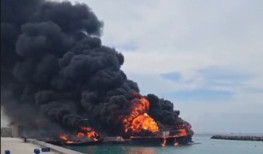
The condemnation comes as the UAE reported a second consecutive day of attacks involving missiles and drones, according to reporting by Al-Jazeera. Citing the UAE Ministry of Defence, Al-Jazeera reports that the latest incident followed strikes a day earlier that left at least three people injured. A drone attack also sparked a fire at a major oil facility in the eastern emirate of Fujairah.
However, Iran has denied any involvement. In a statement carried by state-affiliated media, the Islamic Revolutionary Guard Corps (IRGC) said it had not conducted any missile or drone operations against the UAE in recent days.
The incidents unfold against the backdrop of a widening regional conflict involving the United States, Israel and Iran, which began on 28 February with joint US-Israeli strikes on Iranian targets. Iran has since launched multiple retaliatory attacks against Israel and US military installations in Gulf countries.
Tensions have also disrupted global energy markets. Iran has effectively restricted passage through the Strait of Hormuz for vessels linked to the US and Israel, contributing to a sharp rise in oil prices. Several countries have introduced emergency measures, including fuel rationing, shortened work weeks, and remote working arrangements for government employees, in response to the crisis.