


EPA and Olive Ridley Project Collaborate for Sea Turtle Research Expedition in Maldives
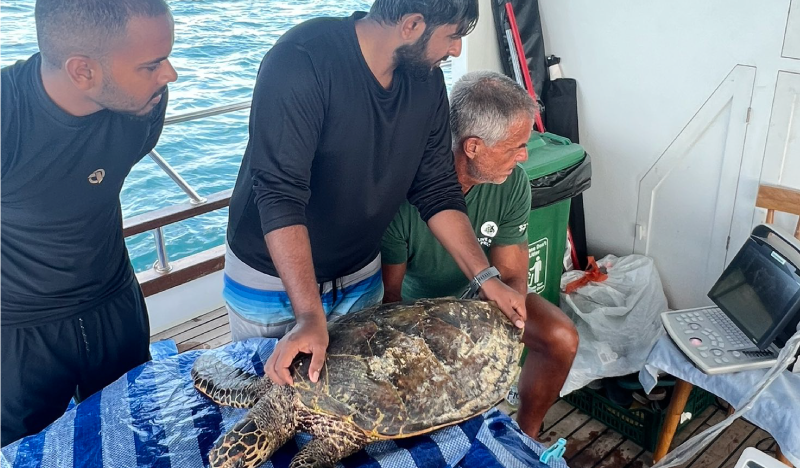
Photo: Environmental Protection Agency
The Environmental Protection Agency (EPA) has joined forces with the Olive Ridley Project (ORP) to embark on a research expedition aimed at addressing current gaps in knowledge concerning sea turtles in the Maldives with a field initiative beginning on 16th August 2023, and will be ongoing until 27th August 2023.
This collaborative effort encompasses participants from the EPA, ORP, a student from the Maldives National University, and staff members from the Baa Atoll Biosphere Reserve Office.
advertisement

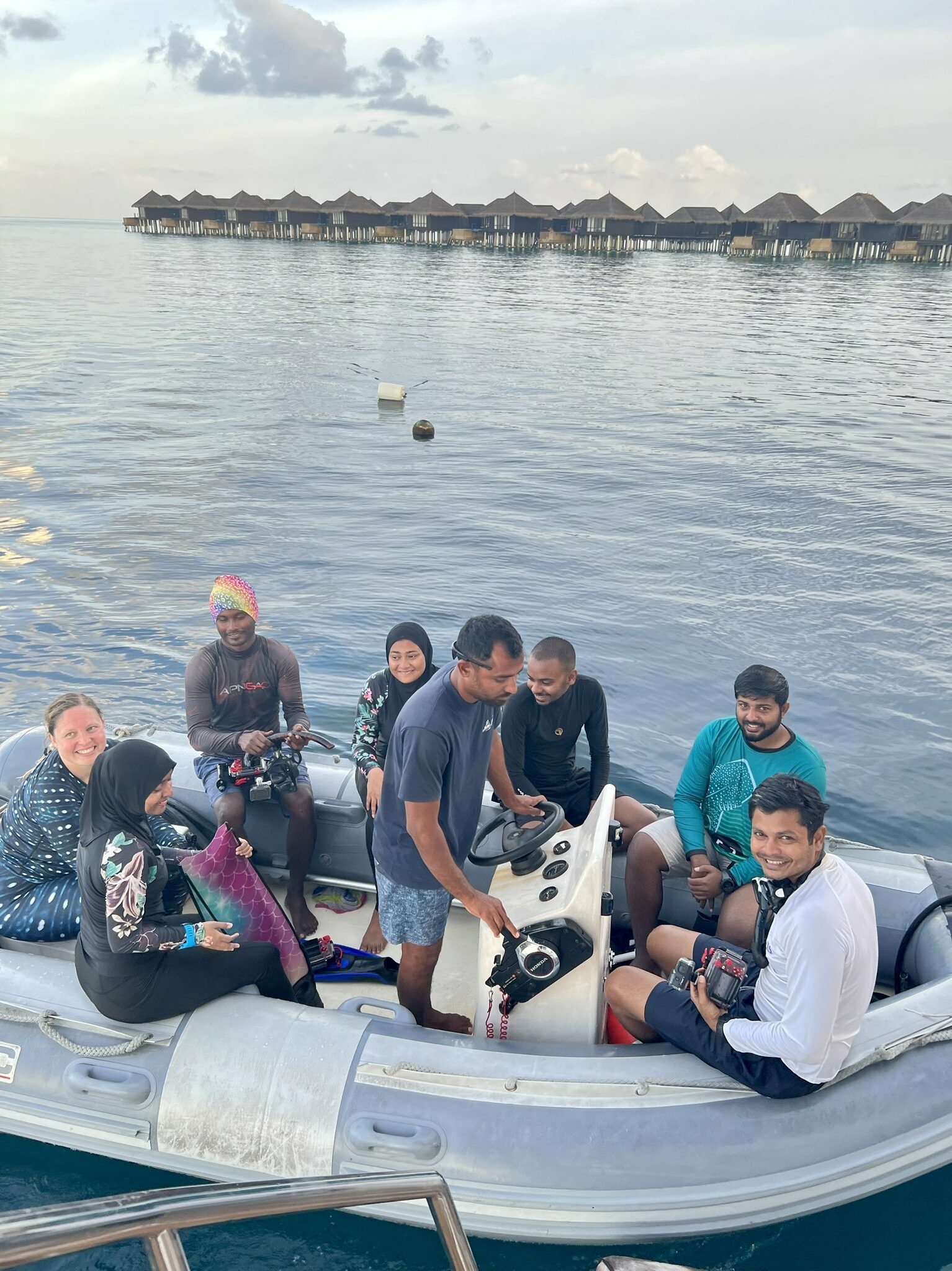
The overarching goal of the expedition is two-fold: to enhance local technical expertise and to provide an academic platform for increased exposure.
Outlined within the research framework are the following objectives:
1. Studying Population Genetics: Researchers will analyse tissue samples extracted from the flippers of hawksbill turtles in the Maldives, delving into their population genetics.
2. Epibionts and External Parasites: The initiative seeks to deepen understanding regarding epibionts and external parasites found in the sea turtle population of the Maldives.
3. Gut Microbiota of Healthy Sea Turtles: An investigation into the gut microbiota of healthy sea turtles in their natural habitat will contribute to the development of a Sea Turtle Health database. This database will house clinical blood indices, guiding future therapies for hospitalized patients and establishing reference intervals for healthy populations.
4. Characterizing Benthic Communities: Researchers will examine the benthic communities prevalent in known sea turtle ‘hotspots’ to unravel potential drivers behind sea turtle site fidelity and habitat preferences.
Of particular focus is the genetics study focusing on hawksbill turtles in the Maldives. This pioneering effort, the first of its kind in the country, is set to provide invaluable insights into the genetic makeup of hawksbill turtles, the most abundant sea turtle species inhabiting Maldivian waters.
The amassed data will be integrated with larger regional studies, facilitating an assessment of hawksbill turtle distribution and connectivity across the Western Indian Ocean. These findings will lend support to both local and regional policy and management strategies.
This study addresses a knowledge gap related to the historical harvesting of hawksbill turtles for the tourism souvenir industry and international tortoise shell trade between the 1970s and 1990s.
The research outcomes will illuminate the repercussions of sea turtle harvest in the Maldives, furnishing information for the conservation management of these highly migratory, protected species. The sampling process will adhere to established in-water capture techniques.
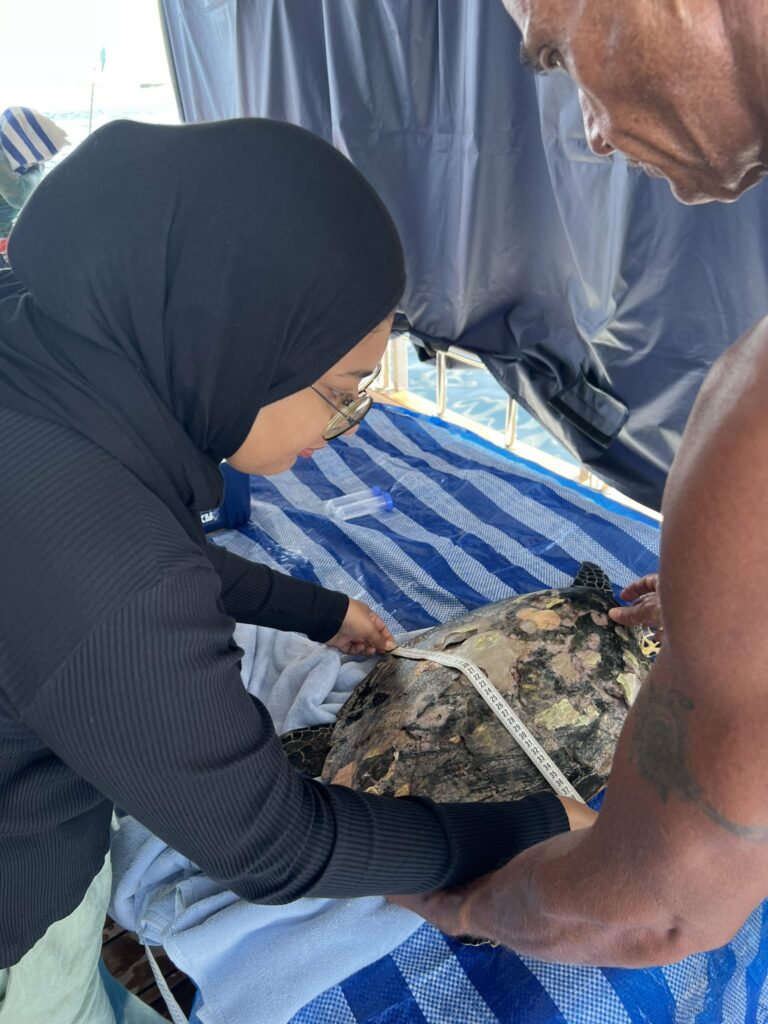
The research into sea turtle microbiota will offer an encompassing perspective on the health of these creatures in the Maldives. This study is to serve as a baseline for future health investigations of sea turtles within Maldivian waters and the broader Indian Ocean region.
Similarly, the study of turtle epibionts will lay the groundwork for comprehending their movement patterns. The assessment of sea turtles entangled in ghost nets originating from other Indian Ocean populations aims to evaluate the potential risk of introducing sea turtle parasites and associated pathogens into the Maldives.