


MMRI Suspects Environmental Factors in Maldives Fish Kill Reports
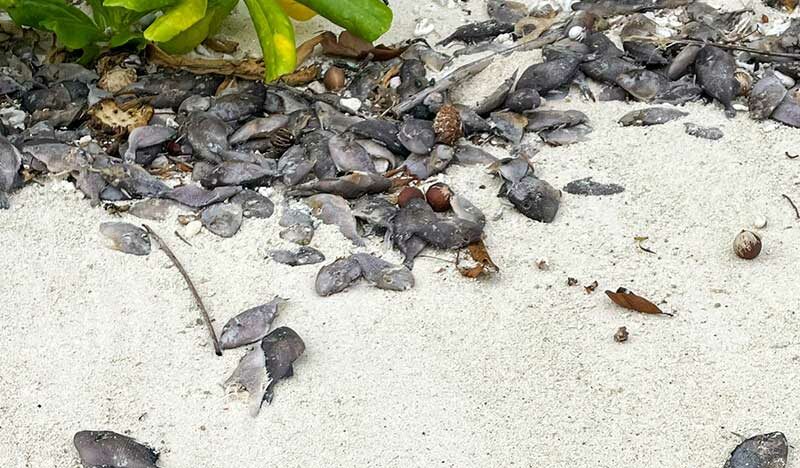
Photo: twitter via @DhonAisaa
The Maldives Marine Research Institute is monitoring fish kills in different regions, with initial findings pointing to factors like higher sea temperatures, lower tides, calm winds, and slow currents as potential causes.
The Maldives Marine Research Institute has received reports of incidents of fish kills in some parts of the country, which could be caused by elevated sea surface temperatures, low tides, slack winds, and weak currents This leads to poor circulation and oxygen depletion, causing pic.twitter.com/jPPaJjQRUK
— Maldives Marine Research Institute (@MMRI_Maldives) September 18, 2023advertisement

The predominant species among the deceased fish is identified as the Red-toothed triggerfish (Odonus niger), known for inhabiting reef slopes and feeding on zooplankton. This surge in fish fatalities has raised questions about the factors contributing to this unsettling trend.
These conditions can lead to poor circulation and oxygen depletion in the water, creating a hypoxic environment that affects the fish population, resulting in die-offs. Experts believe that this phenomenon may have a seasonal aspect to it.
One immediate concern arising from this situation is the potential impact on the overall marine ecosystem. With triggerfish being a vital component of the local food chain, their declining numbers could lead to less productive waters and potential food shortages for other marine species.
Consequently, authorities are advising the public to refrain from consuming fish sourced from affected areas and to avoid beaches where fish kills have been observed.
A number of dead fish have been discovered washing up on the shores of Shaviyani, Noonu, Raa, Baa, and Lhaviyani atoll.
This recent incident serves as a reminder of a similar event that took place in 2007 when a substantial number of fish washed up on islands in Dhaalu Atoll and Meemu Atoll. Investigations conducted at that time revealed that the cause of the fish deaths was linked to the proliferation of harmful algae.