

Gov’t to Impose USD Payments for Taxes and Duties on Companies Generating USD Income
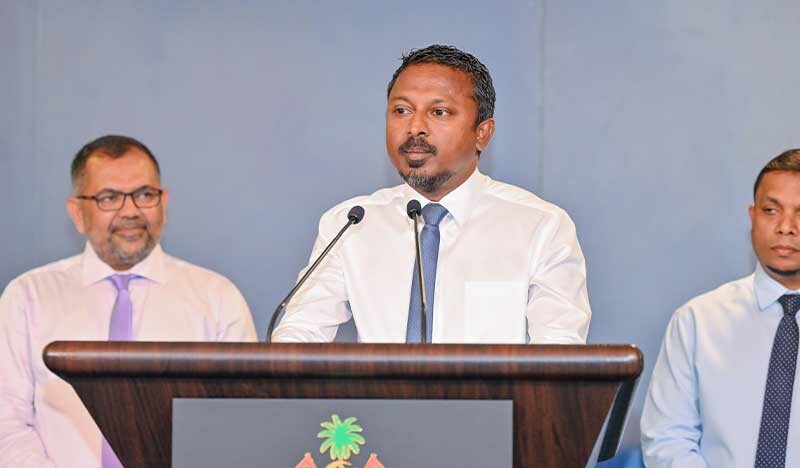
The government has announced plans to amend the country’s regulations to collect income tax, pension contributions, and customs duties in US dollars from businesses that earn revenue in foreign currency.
In a press conference held at the President’s Office, yesterday, Attorney General Ahmed Usham revealed that amendments would be made to the Pension Act, Income Tax Act, and Maldives Inland Revenue Authority (MIRA) Act to address the country’s dollar shortage.
advertisement

advertisement

Usham explained that the cabinet had made significant decisions on this matter, highlighting that some companies earning foreign currency had been paying the state in Maldivian Rufiyaa, even for income tax.
“We will rectify this by changing the laws and regulations. From now on, companies earning income in dollars will be required to pay the government in dollars,” Usham stated.
The Attorney General also pointed out that although employees of these companies are paid in dollars, their pension contributions are made in Maldivian Rufiyaa. This practice will also be changed, requiring pension payments to be made in the same currency as salaries. Consultations will be held with the Maldives Monetary Authority (MMA) and MIRA to facilitate these amendments.
Usham stressed that these reforms are necessary due to the prevalence of black-market currency exchanges, with dollars being sold to meet government payments made in Rufiyaa. The cabinet’s decision aims to prevent this and ensure dollar revenue is directed to the state.
The Attorney General’s Office plans to complete the amendments within the next two weeks and submit them to Parliament. Any related regulations will be addressed within a week.
The announcement follows economic challenges, including the Bank of Maldives’ (BML) controversial suspension of foreign transactions on debit cards, which was later reversed after public outcry. The cabinet’s reform efforts are part of broader measures to ease the country’s US dollar shortage, which has led to rising exchange rates amid increasing debt pressures.