

Gov’t Contracts Bestinet for Expat System Overhaul, Avoiding Costly Compensation, Says Minister

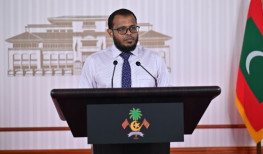
Minister of Homeland Security and Technology Ali Ihusaan has announced that the Maldivian government has entered into a new agreement with Malaysia’s Bestinet Sdn Bhd to revamp the country’s expatriate processing system.
This decision was made to avoid paying a substantial compensation sum, which would have been necessary if the previous contract had been terminated.
advertisement

During a press conference on Thursday, Minister Ihusaan explained that the agreement with Bestinet had been established in 2015, during the administration of former President Abdulla Yameen. The aim of the agreement had been to streamline the process of managing expatriate workers entering the Maldives. However, following the government’s suspension of bringing in expatriate workers from Bangladesh in 2019, the 15-year contract had remained inactive.
Minister Ihusaan detailed that the previous government had engaged in legal discussions to explore possible actions regarding the agreement. A compensation figure of USD 13.7 million had initially been proposed, though this amount did not include potential future claims for losses over the contract’s full duration.
The government was presented with two options: either to pay USD 13.7 million for business losses, followed by further compensation for losses projected over the next fifteen years, or to contract Bestinet to develop a foreign worker placement system in the Maldives.
After considering both options, the government decided that moving forward with the new agreement was more feasible than paying a large sum in compensation. This new arrangement with Bestinet is expected to significantly increase state revenue from expatriate workers, in addition to resolving the legal dispute.
Maldives Expat Processing Overhaul Expected to Increase Annual Revenue to MVR 927 Million
The revamped expat processing system is expected to increase the state’s annual revenue from MVR 685 million to over MVR 927 million. The new system, which is scheduled to be implemented by February next year, will feature advanced technologies such as biometric identification, face recognition, and the capability to capture ten fingerprints from expatriates.
Minister Ihusaan highlighted the inefficiencies of the current system, which is unable to automatically notify employers in breach of regulations or update the blacklisting of non-compliant employers.
Currently, there are 221,231 active work permit applications, although only half of these are regularly paid, generating an annual state income of approximately MVR 685 million. The new system is anticipated to increase compliance, with regular payments expected to rise to 90%, which would significantly boost the state’s revenue.
In addition to increasing revenue, the system will also expand server capacity, ensuring that it remains accessible throughout the Maldives. Minister Ihusaan emphasised that payments to the state will be based on realised income, ensuring that the government does not face losses from employers who fail to make regular payments.
The government believes that this new initiative will bring substantial benefits, not only in terms of increased revenue but also in improving the management and efficiency of the expatriate workforce in the Maldives.