


ACC Can Only Identify, Not Recover, Illicit Funds: Shamil
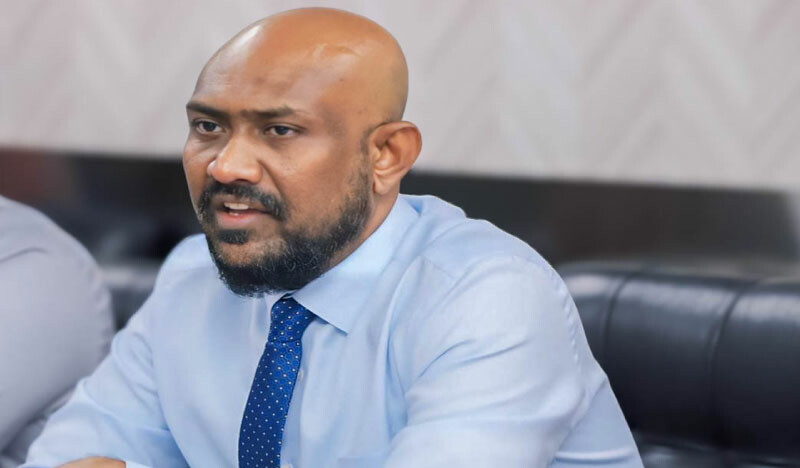
ACC President Adam Shamil. | Photo: ACC
The Anti-Corruption Commission (ACC) has stated that under current law, its role is limited to determining the amount of money to be recovered in corruption cases, and that it has no legal authority to actually recover the funds. ACC President Adam Shamil made the remarks during a review of the proposed 2026 state budget, calling for legislative reform to grant the commission powers for asset recovery.
Shamil explained that while the ACC can identify the sums involved in corruption cases, it cannot take steps to reclaim them. “The only thing we can do under the law is disclose the amount to be recovered. There is nothing legally that allows us to recover the money,” he told the committee.
He said that in many countries, non-conviction-based recovery allows the state to recover illicit assets even when there is no criminal conviction, as long as it can be proven that the property was not acquired legitimately. “If parliament grants us that authority, we are ready to act,” Shamil said. He added that large sums of money identified in the Maldives Marketing and Public Relations Corporation (MMPRC) corruption cases remain beyond the ACC’s reach due to the lack of legal provisions. The MMPRC scandal was a major corruption scandal in the Maldives during former president Abdulla Yameen.
The ACC chief warned that the commission could face action if it overstepped its legal boundaries. “There is a strong belief that the ACC is going to get the money, but under the law we can only identify it. If we can change that, I think it will improve our performance,” he said.
Shamil said an Asset Recovery Bill had been drafted with the help of a foreign expert and shared with the relevant authorities. Ahmed Saleem, Chair of the budget Reviewing Committee, said the bill was reviewed by the committee and sent to the Attorney General’s Office for legal opinion, but has yet to be returned to parliament.
Committee members voiced frustration over the slow pace of anti-corruption efforts despite the funds allocated to the commission. Opposition members also criticised the government for failing to deliver tangible results in combating corruption.
The proposed state budget for 2026 allocates MVR 47.3 million for the ACC—MVR 2 million less than the previous ceiling. Shamil said this amount was not sufficient for the commission to meet its legal obligations, noting that 96.6 percent of the expenditure goes toward salaries, office operations, and capital expenses, while only MVR 1.6 million is spent on programmes.
He highlighted the high cost of maintaining the commission’s premises, with MVR 4.8 million spent annually on rent. “This is happening in a way that makes a state official guilty as soon as he steps through the door. That’s what people can see,” he said, criticising the arrangement that forces the ACC to operate from a private residential building.
The commission had initially requested MVR 84.7 million, nearly double the proposed amount. Shamil said adequate funding and proper legal authority are both essential for the ACC to fulfil its responsibilities effectively.