

Amendment Tabled to Include “Sustainable Townships” Within Maldives SEZs
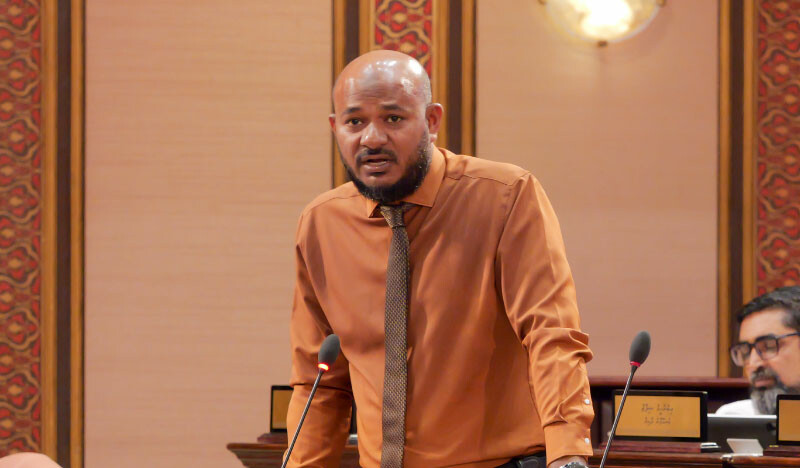
Baarashu MP Ibrahim Shujau . | Photo: People’s majlis
The government has submitted its first amendment to the 2014 Special Economic Zones (SEZ) Act to define and enable “sustainable townships” within designated SEZs, introducing a new class of large-scale, mixed-use developments with strict investment and sustainability thresholds.
The amendment was tabled in Parliament today by Baarashu MP Ibrahim Shujau on behalf of the government. Officials said the bill sets out the minimum criteria for developers and lists incentives designed to attract major investment into multi-sector townships that combine tourism, housing and essential services.
Under the proposal, the baseline requirement for any sustainable township is a minimum investment of USD 500 million (approximately MVR 8 billion).
The draft text also outlines qualitative conditions, including:
Potential for large real-estate schemes that integrate luxury tourism services and high-end residential facilities, or an integrated tourism development combining luxury offerings.
- Establishment of an international-standard hospitality training institute or an international health services centre within the zone.
- Self-sufficiency of core utilities, with at least 60% of energy consumption met by renewable sources, and on-site waste management.
- Development of sustainable, modern agriculture or aquaculture to reduce food imports and bolster domestic production.
- Provision of durable public infrastructure and amenities—housing, schools, healthcare centres and leisure facilities—built to reduce environmental harm while ensuring liveable services and utilities.
Sustainable townships for economic activities within SEZs were formally included by President Dr Mohamed Muizzu via presidential decree on 12 January 2025. Previously, SEZ policy did not emphasise township-style development. On 1 January 2023, President Muizzu outlined nine types of projects to be implemented in SEZs. At present, SEZ projects generally require total investments exceeding US$100 million.
Tense debate in the chamber
Debate in today’s sitting reflected sharp divisions over the scope and intent of the reform.
South Hulhumalé MP Dr Ahmed Shamheed argued the bill is calibrated to “benefit specific groups” and would effectively allow foreigners to obtain land in the Maldives at no cost. He warned that approving the measure would create “an environment not conducive” to fair competition with existing resort operators outside the townships.
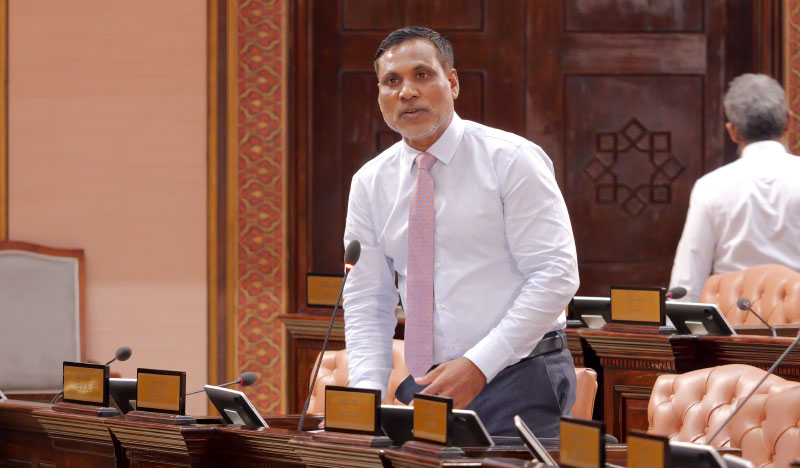
“This township is a resort under development in Noonu Atoll. Eleven islands have already been reclaimed, and some government officials want to turn this area into a special economic zone and exempt it from taxes,” he said, alleging the amendment is tailored to reclassify an ongoing project.
Dr Shamheed further contended the draft would open the door to significant tax breaks—citing exemptions from import duties, TGST and green tax for qualifying developments that include a hotel school and a hospital—while applying only a five per cent profits tax to such ventures, versus 15 per cent for businesses elsewhere. That disparity, he said, would create unhealthy competition and incentivise tourism investors to rebrand as SEZ townships to secure lower rates and waivers. He added the change could forgo roughly USD 50 million in import taxes and reduce expected TGST and other tax receipts from eleven resort projects, which he estimated at US$100–125 million.
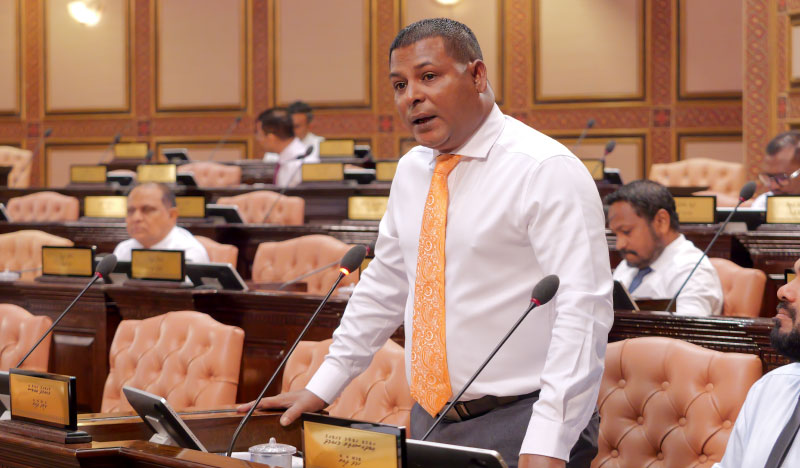
In contrast, Velidhoo MP Mohamed Abbas (MDA) backed the bill, arguing it would deliver jobs and better healthcare access to his constituents. Several ruling-party MPs also spoke in support, claiming the framework would unlock “huge” investment and accelerate regional development. Majority Leader Ibrahim Falah, who represents Inguraidhoo, accused the opposition MDP of trying to reprise “the 2017 Faafu Atoll episode,” saying protests at the time scared off major investment.
The “Faafu Atoll” controversy (2014–2017):
Parliament passed the Special Economic Zones Act in late August 2014 amid opposition protests and walkouts, arguing the framework gave sweeping incentives and discretion to the executive.
In early 2017, reports surfaced of a prospective Saudi-backed mega-development in Faafu Atoll, prompting local demonstrations and calls for transparency. Police dispersed protests and briefly detained participants, according to contemporaneous rights reporting and local media.
The government rejected claims it was “selling” an atoll, saying it was courting a range of investors, while international coverage noted the political tensions and regional sensitivities around the alleged deal; Saudi King Salman’s planned visit that March was widely reported as postponed amid the unrest.