


ECM Failing Deaf and Visually Impaired Voters, Says CSOs
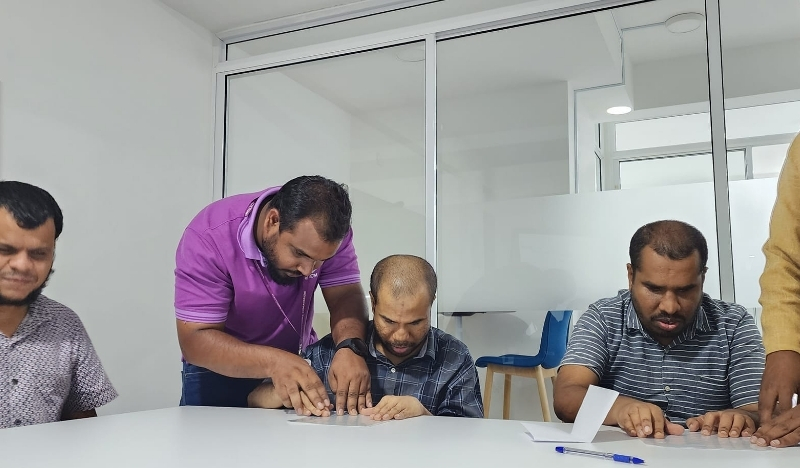
ECM staff teaching the voting process for blind voters. | Photo: BVSM\FB
The Blind and Visually Impaired Society of Maldives and the Maldives Deaf Association, alongside Transparency Maldives and Maldives Local Councils’ Association, have expressed serious concern over accessibility barriers in the upcoming Local Council and Women’s Development Committee (WDC) Elections, and the concurrent national referendum.
A joint press release issued by the four associations said that despite repeated concerns raised by disability organizations and members of the National Advisory Committee for Elections, current arrangements by the Elections Commission of Maldives (ECM) fail to ensure that election information and voting procedures are accessible to deaf voters and blind and visually impaired voters. The absence of accessible information and independent voting mechanisms risks excluding persons with disabilities from meaningfully exercising their right to vote.
@BVISM, @deafmaldives, @TransparencyMV and @councilsmv express grave concern over systemic accessibility barriers in the upcoming 2026 Local Council & WDC Elections and the National Referendum. @ElectionsMv pic.twitter.com/WCoeEjGaGa— Maldives Local Councils' Association (@councilsmv) March 10, 2026
The press said that deaf voters face significant barriers, including the lack of Maldives Sign Language interpretation in official announcements, public information materials, and awareness videos related to the elections and the national referendum. Many deaf voters remain unaware of re-registration requirements, polling station locations, and the voting process. Requests to provide sign language interpretation have reportedly been declined due to budget limitations, despite legal obligations to ensure equal participation, said the press.
Additionally, the press said that ballot papers are only provided in Dhivehi, creating a barrier for deaf Maldivians who primarily read and write in English. Requests to include candidate photographs alongside names on ballots to aid recognition have also not been accommodated. The associations warned that the continued absence of accessible information and visual identifiers prevents Deaf voters from participating independently and confidently.
For blind and visually impaired voters, the press said that although ballot templates were introduced in 2023 to allow independent and secret voting, regulatory changes now require voters to register for each election to access the templates. This conditional requirement, implemented without consultation with disability organizations, shifts the administrative burden onto individuals and limits access. The press noted that awareness of template ballots is low, election officials are not fully informed, and the 1414 hotline has provided inconsistent information.
The press said that these systemic barriers affect an estimated 4.5% of the electorate, including around 8,150 blind or visually impaired individuals (3.1%) and 3,813 Deaf individuals (1.4%). The associations argued that excluding voters with disabilities undermines equal citizenship and democratic participation, particularly with a national referendum included in the ballot.
The press called on the Elections Commission to take several measures before polling day, including:
- Providing Maldives Sign Language interpretation in all election information and public awareness materials.
- Offering accessible voter education and clear guidance on registration and voting procedures for persons with disabilities.
- Ensuring accessible voting arrangements for blind and visually impaired voters are available at polling stations.
- Reviewing administrative procedures that create barriers to independent voting.
- Training election officials and hotline staff on accessibility measures.
- Engaging directly with representative organizations of persons with disabilities to resolve issues.