

Falah Accuses MDP of Harming National Interests During Debate on Middle East Conflict
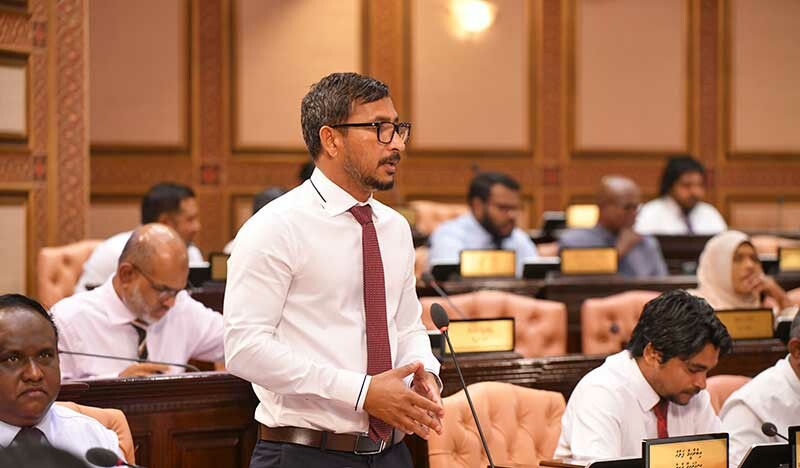
People’s National Congress (PNC) parliamentary group leader Ibrahim Falah | Photo: People’s Majlis
Inguraidhoo MP and People’s National Congress (PNC) parliamentary group leader Ibrahim Falah has accused the opposition Maldivian Democratic Party (MDP) of causing greater harm to the Maldives than the ongoing conflict between Israel and Iran.
Falah made the remarks yesterday during a parliamentary debate on an emergency motion submitted by MDP MP Meekail Ahmed Naseem, which called on the government to take immediate steps in response to the escalating situation in the Middle East. The motion expressed concern over the potential economic fallout for the Maldives, especially in the tourism sector.
advertisement

advertisement

advertisement

MP Meekail highlighted that Iran had begun retaliatory attacks following airstrikes by Israel and the United States. He warned that a broader regional conflict could severely disrupt air travel, thereby directly affecting the country’s tourism industry—a critical source of revenue and foreign currency.
Speaking during the debate, Falah accused the opposition of failing to uphold national interests. He said the MDP, despite being the largest political party in the country and receiving the highest allocation of state funding, continues to act in ways that harm the nation. He alleged that the party had previously undermined the tourism industry by calling for international boycotts.
Referring to the political unrest following the resignation of former President Mohamed Nasheed in 2012, Falah claimed that MDP leaders had travelled to European countries and lobbied against the Maldives’ tourism sector. He said party representatives had visited various resorts to support a campaign that negatively affected the industry.
Falah also stated that the government is closely monitoring developments in the Middle East. He assured that relevant ministries are working under the direction of President Dr Mohamed Muizzu to manage and mitigate any potential disruptions.