

Female Victims Continue to Dominate Reported Child Sexual Abuse Cases in the Maldives
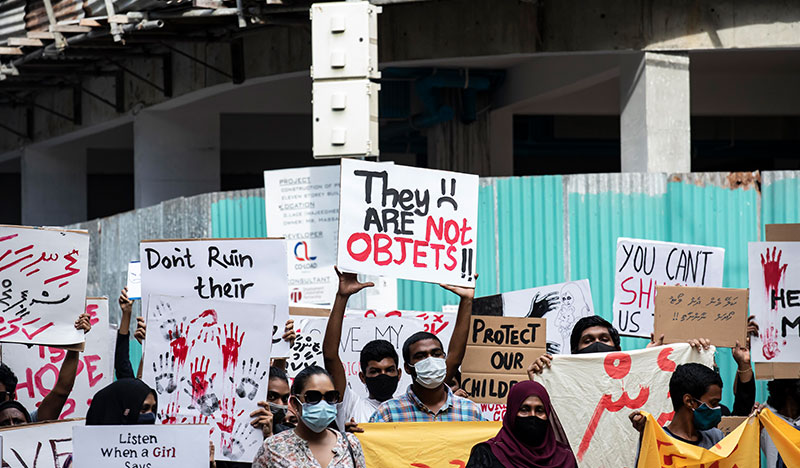
The statistics from February, January, and December 2025 show a consistent pattern of girls making up the majority of reported sexual abuse cases.
Female victims continue to disproportionately dominate child sexual abuse, according to February statistics published by the Ministry of Social and Family Development, with 12 cases involving girls compared to just one involving a boy.
According to the ministry’s data, sexual abuse cases involving girls outnumbered those involving boys in each of the recent reporting periods. In December, 10 cases involving female victims were reported compared to four involving males, alongside two cases classified as unspecified. The trend continued in January, with 11 reported cases involving girls and only one involving a boy. In February, cases involving female victims again remained higher at 12, compared to one reported case involving a male child.
The statistics from February, January, and December show a consistent pattern of girls making up the majority of reported sexual abuse cases, underscoring persistent gendered vulnerabilities among children in the Maldives.
The data indicate not only consistency but also a widening gap in certain months, particularly in January and February, where reported cases involving girls were more than ten times those involving boys. While overall case totals between boys and girls fluctuate across categories, the concentration of sexual abuse cases among girls remains one of the most consistent and concerning patterns in the data.
In contrast, reported physical abuse cases show a different trend, with boys making up the majority. In December, 12 cases involved male victims compared to three involving females. January recorded three male victims and one female victim, while February saw 10 cases involving boys and two involving girls.
The findings come amid broader concerns raised by the United Nations Committee on the Rights of the Child, which recently warned that violence against children in the Maldives remains widespread and underreported. In findings published on 5 February, the Committee said domestic violence, sexual and gender-based violence, abuse, and neglect continue to be pervasive issues in the country.
The Committee highlighted that stigma and entrenched cultural taboos are major barriers to reporting abuse and ensuring accountability, echoing concerns long raised by child protection advocates. It also pointed to growing mental health challenges among children and obstacles in accessing adolescent sexual and reproductive health services.
In response, the Committee urged Maldivian authorities to fully implement the National Action Plan for the Prevention and Response to Violence against Children, prioritise the investigation and prosecution of offenders, and strengthen the capacity of law enforcement and social services to respond effectively to abuse.
While the ministry’s figures reflect only reported cases, they align with the Committee’s warning that violence against children remains a serious and systemic issue. The consistent overrepresentation of girls in sexual abuse cases, in particular, highlights the need for targeted prevention efforts and improved reporting mechanisms.
As authorities continue to respond to cases of abuse, both the national data and international findings point to the same conclusion: without addressing stigma, strengthening institutions, and improving access to support services, many cases of violence against children in the Maldives may continue to go unreported.