


Foreign Currency Bill Submitted to Parliament, Offers Flexibility to Resorts
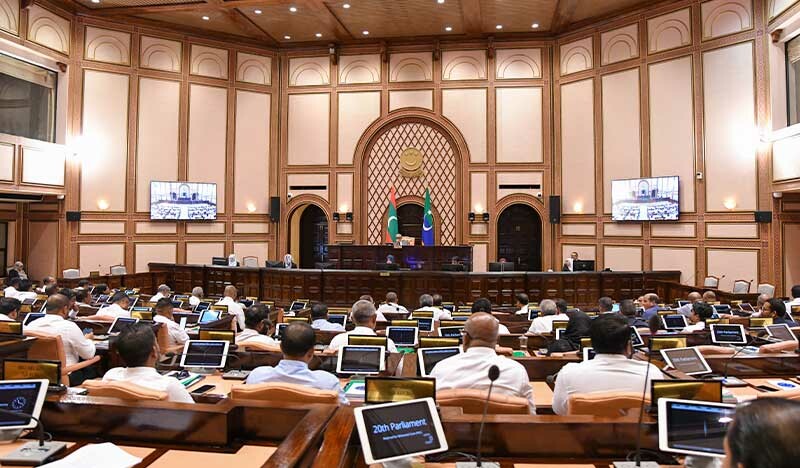
A new foreign currency bill has been introduced to the Parliament that provides resorts with an alternative to the current fixed foreign exchange requirement.
The proposed bill allows resorts to either exchange USD 500 per tourist, as previously mandated, or 20 per cent of their monthly revenue.
advertisement

advertisement

advertisement

The current foreign exchange regulation, which came into effect on 1 October, requires tourist establishments to convert a set amount of USD to local banks. Resorts are obligated to exchange USD 500 per tourist, while guesthouses must exchange USD 25 per tourist.
However, this regulation has faced significant criticism from major players in the tourism industry, who argue that the uniform USD exchange requirement is unfair. Concerns have focused on the fact that the policy does not account for differences in room rates, duration of guests’ stays, age groups, or special offers, as well as the fact that many operational expenses are paid in USD.
Despite these concerns, President Dr Mohamed Muizzu confirmed on 17 November that the regulation would remain unchanged, requiring resorts to surrender USD 500 per tourist.
On 26 November, the Maldives Monetary Authority (MMA) announced the draft of a new Foreign Currency Bill, shared with industry stakeholders for feedback. The finalised bill, now submitted to Parliament, retains the USD 500 requirement for resorts but introduces certain concessions to address the concerns of the tourism sector.
The bill, sponsored by Ibrahim Falah, parliamentary group leader of the ruling People’s National Congress (PNC), classifies tourist establishments into two categories.
Category-A establishments, which include registered resorts, integrated tourist resorts, and private islands, will have the option to exchange either USD 500 per tourist or 20 per cent of their monthly revenue.
Category-B establishments, including registered tourist vessels, tourist hotels, and guesthouses, will be allowed to exchange either USD 25 per tourist or 20 per cent of their monthly revenue.
The bill also outlines exceptions to the requirement. Tourist establishments will not have to exchange USD for tourists who spend less than 24 hours at the establishment, for children under the age of 10, for complimentary guest stays, or for guests hosted by government initiatives.
Furthermore, the bill lowers the threshold for non-tourism businesses that generate significant USD revenue. Businesses with annual USD earnings of over USD 15 million (reduced from the previously proposed USD 20 million) will need to exchange a percentage of their monthly revenue and register with the MMA.
The bill establishes penalties for non-compliance. Businesses failing to meet the USD deposit requirements will face a fine of 0.25 per cent of the monthly deposit amount, with the MMA permitted to impose a daily penalty not exceeding 0.25 per cent until compliance is achieved. Similarly, failure to adhere to the USD exchange requirement will incur a fine of 0.5 per cent of the monthly exchange requirement, with daily penalties of up to 0.5 per cent also applicable until the business complies.
This new proposal introduces flexibility while maintaining oversight, aiming to address both operational needs and concerns within the tourism and business sectors.