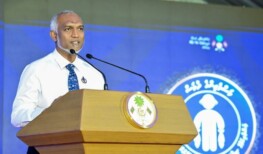


Fraudulent Form Issue to be Solved by February 15, Says ECM
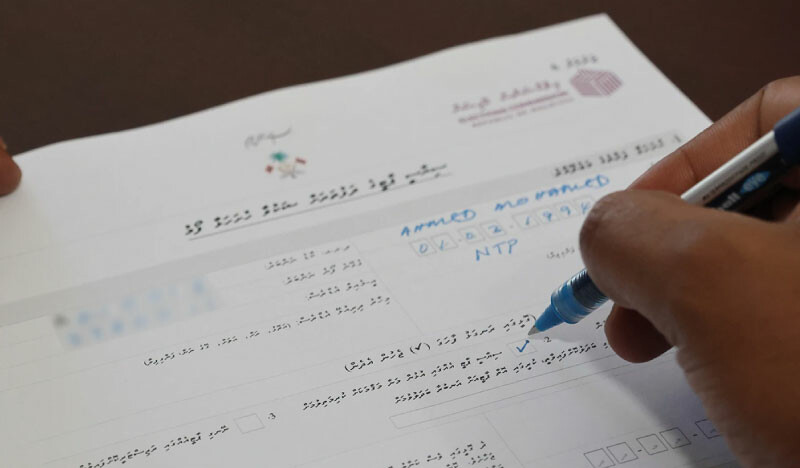
Photo: ECM
Member of the Elections Commission of the Maldives (ECM), Hassan Zakariyya, stated that once Efaas is integrated into the registration and party defection processes—which will take effect on 15 February—the issue of fraudulent registration will be resolved.
In an exclusive interview with MV+, he explained that once the gazetted regulation is implemented, party registration can be carried out using Efaas, the Maldivian national digital ID.
advertisement

advertisement

advertisement

“The implementation of this regulatory change on 15 February will instil confidence, and we can assure the public that no political party will be able to submit registration forms in another person’s name,” Hassan said.
With this change, citizens will have greater autonomy in joining and leaving political parties, Hassan added.
“When the new regulation comes into effect on 15th February, we can ensure that no political party will be allowed to use someone else's name to submit a form,” says Hassan Zakariyya, a member of the Elections Commission of the Maldives (ECM).
In an exclusive interview with MV+,… pic.twitter.com/pg5rVa2lwN— MV+ (@mvplusmedia) February 8, 2025
His remarks come amid public outrage over fraudulent forms allegedly submitted to the ECM by the ruling People’s National Congress (PNC). The ECM has since updated the political party registry in response to the case.
Hassan stated that processing forms submitted by 31 December was a standard practice, and the ECM followed the same procedure this time. However, upon reviewing the list, issues were identified, prompting the commission to issue a public notice urging affected individuals to report any discrepancies.
Hassan further noted that state funds for political parties will only be disbursed after resolving these registration issues. He emphasised that it is the responsibility of individuals to ensure their names are correctly listed in party registries.
Additionally, Hassan highlighted the challenges faced by the ECM in managing the political party registry due to inadequate state funding and resources. While the registration forms submitted to the ECM include applicants’ fingerprints, he said the commission lacks the resources to verify them. The ECM has repeatedly requested the necessary facilities from Parliament, but these requests have not been met.
Regarding political party funding, Hassan reiterated the ECM’s stance on state budget allocations.
“Our proposal is that state funding should be provided to all political parties based on their membership numbers, even if they do not have 10,000 members,” he said.
Hassan explained that the ECM has proposed alternative funding mechanisms to Parliament. One such proposal suggests dividing state funds into two parts—one based on the number of registered members and the other on the votes secured in elections.
Currently, political parties receive state funding only if they have more than 10,000 members. Hassan noted that the ECM has submitted additional funding options for government and parliamentary consideration. One suggestion involves allocating 20% of the total membership-based funds equally among all political parties, while the remaining 30% would be distributed according to membership numbers.
“If this is implemented, even smaller political parties will be encouraged to contest elections and put forward candidates. This is because, even with just one vote, they would still receive some funding. Ultimately, ensuring political engagement is crucial for a robust democratic system,” Hassan said