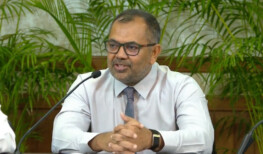


FSC Advocates Assisted Reproductive Treatment for Medical Tourism

Photo: MV+
The local NGO Fertility Support Community (FSC) is pushing for advancements in Assisted Reproductive Treatment (ART) with a focus on medical tourism.
We have published our policy recommendation paper ‘Infertility in the Maldives’ on our website for all to access. https://t.co/KYcEiDXxqW— Fertility Support Community (@FS_Community_) September 3, 2023
In their policy recommendation paper titled ‘Infertility in the Maldives’, the only NGO exclusively fighting for infertility rights, FSC, highlighted several recommendations to the authorities to address the issues in this area; among which was to introduce ART-related medical tourism.
Assisted Reproductive Treatment:
A key recommendation by the FSC is the development of ART for medical tourism in the Maldives. Recognising the Maldives as an ideal tourism destination, they propose collaboration between healthcare providers and the government to introduce ART-related medical tourism.
“While this is needed direly, the necessary policy to protect service providers, & couples/families involved in ART must be thoroughly implemented in a way that both parties are not exhausted financially,” wrote FSC in their paper.
FSC also highlighted:
- ART-related medical tourism would be more feasible since Maldives’ Population is small and ART facilities are an expensive investment by health care providers.
- Billing for embryo storage is expensive, FSC believes the best route is to provide options to couples for long-term storage of embryos up to 5 years for their first child included in their initial IVF package.
- Encouraging more healthcare providers to introduce services such as IUI will enable fair pricing of treatments
Public Health Protection:
FSC recommended a nationwide survey to assess infertility prevalence and the activation of infertility codes within the National Health Insurance system ‘Aasandha.’
This data would allow for more effective advocacy and prevention measures within the public health sector, supporting both local and international patients seeking ART services.
“Identifying the medicine needed for this community is crucial with a consistent supply of medicines needed especially to those diagnosed with lifelong or painful conditions such as endometriosis, recurring cysts, & miscarriages,” wrote FSC.
FSC also highlighted:
- The importance of training & development of healthcare providers on matters such as guiding couples with infertility, encouraging them to seek second opinions and joining peer-supported programmes to exchange information
Financial Assistance and Insurance:
Financial assistance is also on the FSC’s agenda, as they propose considering financial aid for couples facing infertility.
Additionally, they suggest exploring insurance coverage for infertility-related expenses within the government health insurance scheme, Aasandha. This would make medical tourism for ART more accessible and financially viable for both local and international patients.
Medical leave:
FSC suggest providing 1 month IVF leave to those who are medically required to go abroad for ART.
If the treatment is available locally, this could be reduced up to 2 weeks which could be used at the patient’s discretion of which period of the ART procedure.
FSC also recommend establishing ‘family planning leave’ in private and tourism sectors based on recommendations by the government.
Statistics & Data on Infertility in the Maldives:
Supplementing these recommendations, the FSC provided statistics and data based on a survey conducted on its registered members regarding infertility:
- The average age group among 309 of their registered members spans from 20 to 45 years, highlighting the age brackets affected by infertility.
- The average length of marriage varies from 1 to over 17 years, with many couples attempting to conceive for more than six years.
- The most common diagnosis among their members is Polycystic Ovarian Syndrome.
- The most common treatments undertaken by their members include IUI and follicular studies.
Infertility in the Maldives is not an uncommon condition, and it can be heartbreaking and expensive for couples looking to start a family. However, due to limited research on the subject within the country, crafting policies to ease these difficulties for citizens is a growing challenge.