


Gov’t Committed to Ensuring Economic Growth is Aligned with Environmental Sustainability, Says Muizzu
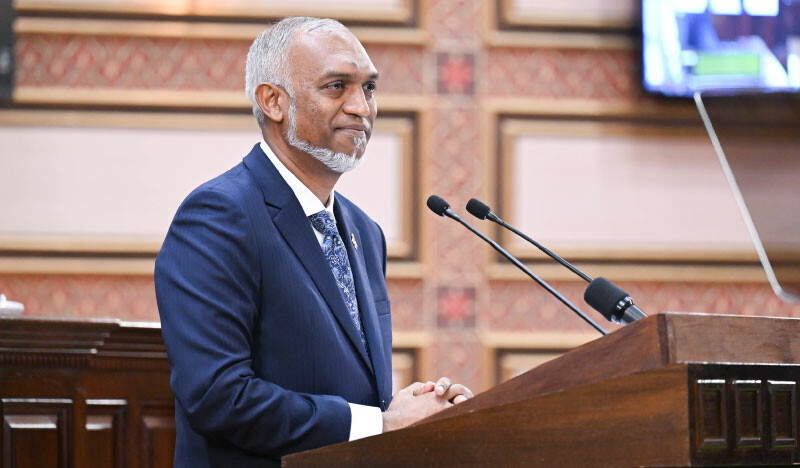
Photo: President’s Office
President Dr Mohamed Muizzu said today that the government is committed to ensuring the economic growth of the Maldives is aligned with environmental sustainability.
In a statement posted on the President’s Office website to celebrate World Day of Social Justice, he said they are dedicated to promoting fairness, equality, and justice for all.
advertisement

advertisement
advertisement

“Today, we must reaffirm our commitment to creating a world where social equity and environmental sustainability are in harmony,” he said in the statement.
The Maldives became a member of the Global Coalition for Social Justice in July 2024, joining efforts to advance social justice through collective action, strengthen societal resilience, improve the coherence between cross-sectoral policies and foster dialogue for shared prosperity. Reflecting on this year’s theme, “Strengthening a Just Transition for a Sustainable Future,” he said the theme recognised the challenges that come with maintaining environmental sustainability along with rapid economic development.
“In the Maldives, we are making bold strides to transform our economy and future development trajectory. As such, we have set ambitious development goals to improve the lives of everyone living in our geographically dispersed islands,” President Muizzu said.
He noted the government’s commitment to developing Ras Male’ and other urban centres nationwide.
“We are committed to ensuring that our economic growth is aligned with environmental sustainability, especially given the vulnerability of our islands to climate change,” he said.
“To this end, Ras Malé will serve as a pioneering Eco-City, setting new sustainability standards while addressing critical housing needs and fostering economic prosperity for our citizens.”
Muizzu highlighted the Maldives’ ambition to achieve a low-carbon economy must be inclusive and beneficial to all. Policies are being implemented to increase the share of renewable energy sources to 33 percent by 2028, supported by initiatives such as the Energy Roadmap 2024-2033. These efforts aim to reduce reliance on fossil fuels and enhance energy security. Gender equality and social inclusion (GESI) are integrated into this approach to ensure policies deliver inclusive outcomes. He said strategies are being developed across economic, environmental, social, educational, and labour sectors to drive this transition, inclusive of empowering MSMEs, workers, investors, and consumers to actively contribute to an inclusive and environmentally sustainable economy.
“We acknowledge the significance of creating opportunities for vulnerable groups, such as women, persons with disabilities, youth and the elderly, ensuring that no one is excluded from this transition,” President Muizzu said.