

IMCTC Holds Symposium in Addu City to Address Ideological Extremism in Education
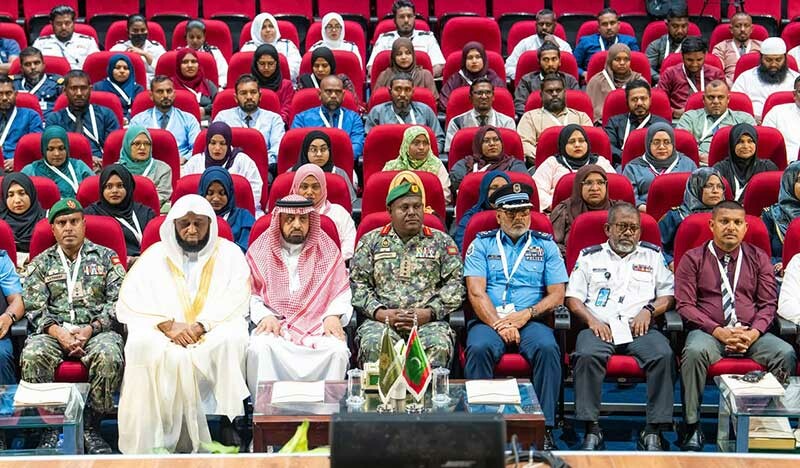
Photo: Islamic Military Counter Terrorism Coalition
The Islamic Military Counter Terrorism Coalition (IMCTC) held an ideology symposium in Addu City on Monday, focusing on raising awareness among educational and community stakeholders to prevent extremism and ideological deviation within learning environments.
The event, titled “Manifestations of Ideological Extremism in the Educational Environment”, was organised as part of IMCTC’s ‘Prevention’ initiative. It brought together academics, experts in ideology, education and media, as well as representatives from government bodies, educational institutions, and other relevant stakeholders.
The symposium featured a series of thematic sessions addressing the roots and manifestations of ideological extremism in schools and universities. The first session, presented by Aref bin Awad Al-Rikabi, Professor of the Principles of Jurisprudence at Umm Al-Qura University, explored signs of extremism in educational contexts, including intolerance, rejection of differing viewpoints, social isolation, and rigid interpretations of public issues. He emphasised the importance of fostering a culture of dialogue and mutual respect while reinforcing accurate legal and religious concepts among youth.
The second session, delivered by Dr Khaled Mayar Al-Idrissi, Head of the Moroccan Centre for International and Future Studies, examined the factors contributing to the spread of extremism in education. He highlighted the weakened role of families, limited academic guidance, and inadequate teacher training in recognising and countering extremist ideas. Dr Al-Idrissi also noted that digital and media challenges have amplified exposure to radical ideologies, calling for the development of monitoring mechanisms and awareness tools within schools through sustainable training programmes.
In the third session, Emirati researcher and writer Mohammed Khalfan Al-Sawafi discussed preventive strategies for teachers and educators. He underscored the crucial role of teachers in promoting moderation and tolerance, cultivating critical thinking, and detecting early signs of extremist behaviour. He further stressed the need for closer collaboration between schools, families, and communities to build a unified front against ideological extremism.
The symposium concluded with an open discussion session that produced several recommendations. These included incorporating values of moderation into educational curricula, creating continuous teacher training programmes to counter extremist ideologies, strengthening coordination between schools and families for early intervention, and supporting research on extremism within educational environments.