

Inception Workshop Launched for Maldives’ First Climate Change Gender Action Plan
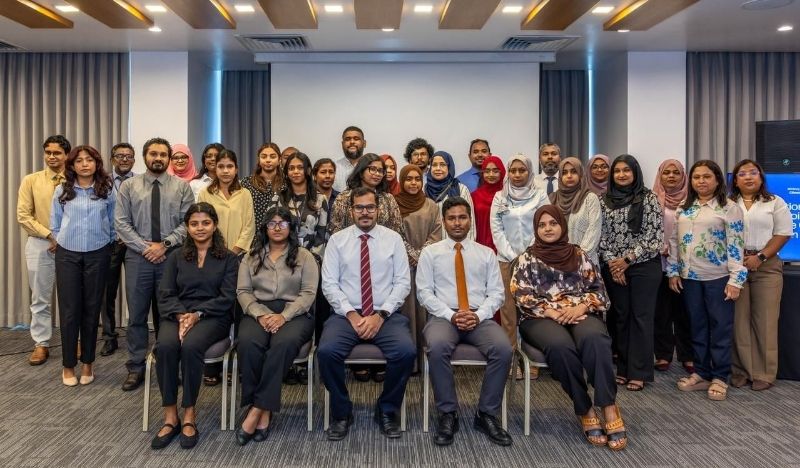
Participants of the Maldives’ first Climate Change Gender Action Plan (CC-GAP) on Monday, Janurary 26, 2026 | Photo: Ministry of Tourism and Environment
The Ministry of Tourism and Environment, in collaboration with the Ministry of Social and Family Development, has conducted an inception workshop for state institutions and other organisations, to initiate the development of the Maldives’ first Climate Change Gender Action Plan (CC-GAP).
The workshop, held on Monday, brought together representatives from a range of institutions, including the President’s Office, the Ministry of Foreign Affairs, the Ministry of Finance and Planning, the Ministry of Education, Maldives Meteorological Services, The Maldives National University, the Islamic University of Maldives, local non-governmental organisations, and UN agencies such as UNDP and UNICEF.
advertisement

Minister of State for Tourism and Environment Ibrahim Mimrah officially inaugurated the workshop. According to the Ministry of Tourism and Environment, he said in his remarks that the impacts of climate change across sectors such as health, infrastructure, disaster risk reduction, livelihoods and income generation are increasingly shaped by existing gender disparities. He noted that recent findings from the ministry show that the knowledge and leadership skills of women and marginalised groups are not being sufficiently recognised or utilised in the formulation and implementation of climate-related policies and programmes.
Although activities aimed at empowering women are included in the Maldives’ third Nationally Determined Contributions (NDC 3.0), also known as the Climate Action Plan, Mimrah said the CC-GAP marks the first initiative developed with a specific focus on ensuring gender equity within the climate change context.
The Climate Change Department of the Ministry of Tourism and Environment said the CC-GAP will provide a dedicated framework to systematically integrate gender considerations into climate adaptation and mitigation planning, implementation and monitoring processes.
During the workshop, participants examined the link between gender and climate change in the Maldives through presentations and group discussions. These sessions identified sector-specific vulnerabilities and gaps in existing policies, while also highlighting opportunities to strengthen gender-responsive approaches.
Participants also worked collaboratively to develop an initial conceptual framework and to identify priority actions to promote gender-responsive climate interventions across key sectors.
The CC-GAP is being developed by the Climate Change Department of the Ministry of Tourism and Environment, with technical assistance from the NAP Global Network.