


Maldives Ocean Alliance Applauds Gov’t’s Commitment to Shark Conservation
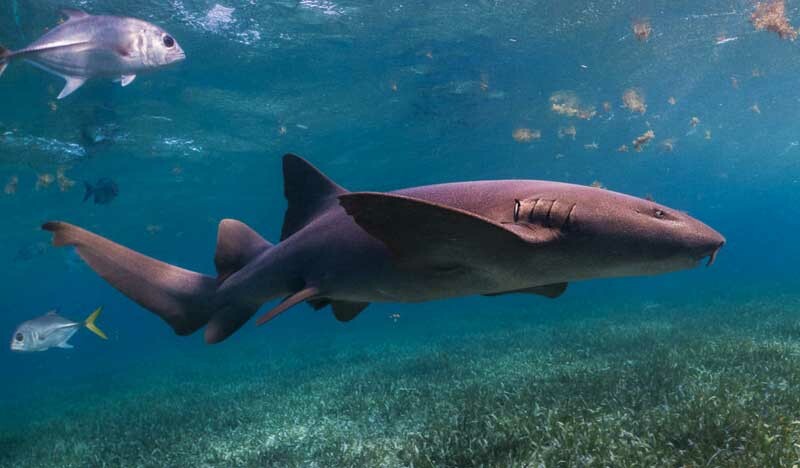
The Maldives Ocean Alliance (MOA) has welcomed the government’s recent affirmation of continuing the ban on shark fishing in Maldives.
In a press release posted on Monday, MOA said that the decision, announced amidst growing concerns voiced by local and international marine scientists, has “alleviated some of the concerns around a potential lifting of the shark fishing ban”
advertisement

advertisement

advertisement

In a concerted effort to uphold marine conservation efforts, the MOA, representing 13 member organisations, had earlier penned a joint letter on 11th June 2024 to the Ministry of Fisheries and Ocean Resources, Ministry of Climate Change and Environment, and the President’s Office. The letter emphasised the economic and environmental benefits of safeguarding shark populations in Maldivian wasters.
It highlighted the vulnerability of sharks to overfishing due to their slow growth and low reproductive rates and the crucial role of sharks in sustaining the Maldives tourism Industry.
Shark-related tourism activities, is estimated to produce revenue of USD 14.4 million directly andn additional USD 51.4 million for local businesses.
Furthermore, the MOA cautioned against the introduction of long-line fisheries in Maldivian waters, advocating instead to maintain sustainable fishing practices like pole-and-line, handline, and trolling methods currently practiced in the Maldives.
These methods are hailed as the world’s most eco-friendly techniques and are integral to the country’s reputation as a sustainable tuna fishery. In contrast, long-line fishing poses risks of extensive by-catch, threatening species such as sharks, turtles, rays, seabirds, and dolphins, as well as potentially depleting tuna stocks vital to local fishers.
MOA also urged for stringent regulations to curb detrimental practices such as shark feeding, which can disrupt natural behavioural patterns of sharks.
Established in 2023, the Maldives Ocean Alliance comprises 21 organisations dedicated to marine conservation. Their collaborative efforts encompass research, outreach, education, and advocacy aimed at safeguarding ocean health and promoting sustainable practices for the benefit of both wildlife and communities.