


Maldives Petition Committee Dismisses Journalists’ Opposition to Media Bill
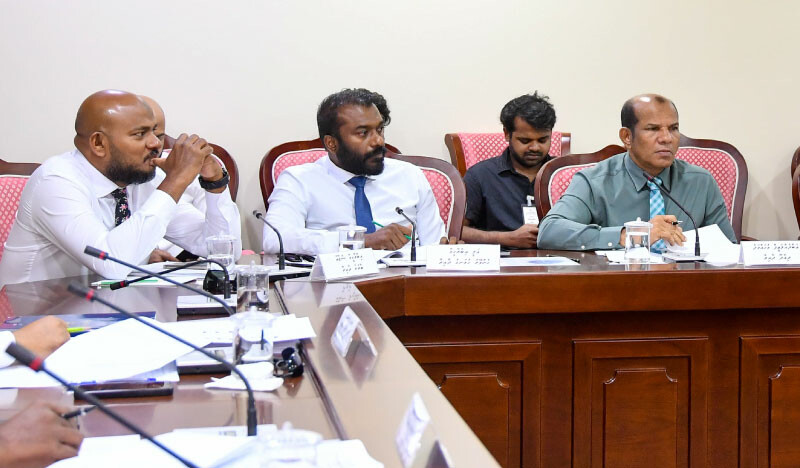
The Maldives Parliament’s Committee on Independent Institutions. | People’s majlis
The Maldives Parliament’s Petition Committee has rejected a petition signed by more than 150 journalists calling for the withdrawal of the Media Regulation Bill, a day after the Committee on Independent Institutions approved the legislation with 72 amendments.
The petition, submitted by the Maldives Journalists Association and endorsed by media professionals nationwide, was dismissed following a proposal by Madaveli MP Mohamed Shameez of the ruling People’s National Congress (PNC). Shameez argued that the concerns raised had already been addressed during the review process. His motion was supported by PNC members and carried by the committee majority, while MDP’s Vaikaradhoo MP Hussain Ziyad opposed the decision.
advertisement

advertisement

advertisement

Later on Tuesday, the Committee on Independent Institutions held a meeting to finalise its report. Committee chair Hussain Riza confirmed that while the bill had been passed the previous day, the report required review by the parliament’s counsel general. Opposition MP Meekail Ahmed Nasym called for time to examine the counsel general’s comments, but amid his protests the ruling party majority voted to adopt the report. The move clears the way for the bill to be tabled at a sitting of parliament for approval.
The bill, tabled on 18 August by Independent MP Abdul Hannan Aboobakuru, seeks to dissolve the Maldives Media Council and the Broadcasting Commission, replacing them with a new Maldives Media and Broadcasting Commission. The proposed body would hold wide-ranging powers, including the ability to fine outlets up to MVR 250,000, suspend licences and block content. Amendments introduced by Kelaa MP Abdulla Shareef also changed the composition of the commission, granting parliament the power to appoint three members and dividing the four elected seats between broadcasting and other media sectors. Journalists fear the arrangement could give state-owned outlets disproportionate influence.
The legislation has been strongly criticised by journalists, civil society organisations and international groups, who argue it threatens press freedom and could be used to arbitrarily restrict reporting under vague provisions related to “public order” and “national security”. Protests have been staged outside Parliament and the President’s Office, with journalists demanding the bill’s withdrawal rather than amendment. Earlier this month, tensions escalated when reporters were forcibly removed from a closed-door committee session, prompting further criticism of the review process.
Government-aligned MPs insist the legislation will strengthen journalism, maintaining that concerns raised by media professionals have been taken into account. Opposition lawmakers, however, have described it as a “Media Control Bill” and warned that it risks undermining media independence.