

Maldives Reclaimed More Land in 24 Years Than Europe and Africa Combined, Study Finds
Finance Ministry invites firms to create Transport Master Plan and feasibility study for Male’-Rasmale’ link | Photo: HDC
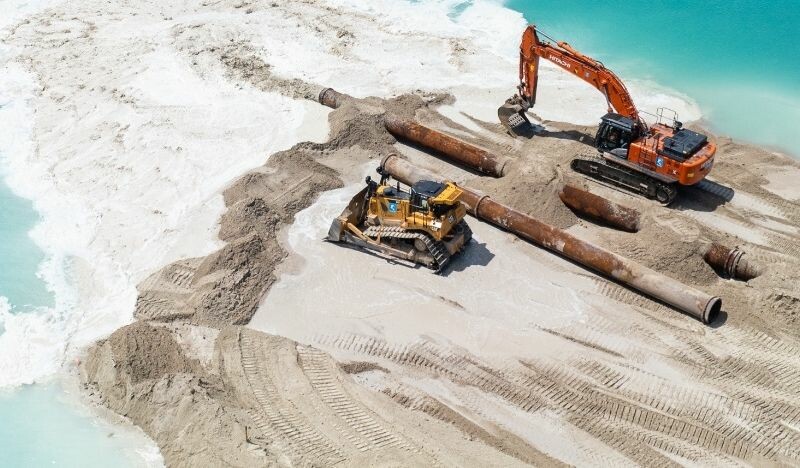
The Maldives reclaimed more land between 2000 and 2024 than the combined total reclaimed across Europe and Africa during the same period, according to a new study that warns political incentives, weak planning and inadequate environmental oversight are driving an unprecedented transformation of the country’s geography.
The study, titled Land Reclamation in the Maldives: Trends and Impacts from 2000 to 2024, by Hussain Ziyath, Eden Rigo, and Fathimath Shanna, found that more than 4,000 hectares of artificial land were created nationwide over the past 24 years.
advertisement

Researchers described the scale of development as exceptional, noting that 109 reclamation projects were launched across 69 islands, with one in every three inhabited islands undergoing significant physical alteration through dredging and land creation.
The study identified a sharp increase in reclamation activity following the Maldives’ transition to multi-party democracy in 2008. Researchers said reclamation projects accelerated significantly after electoral competition intensified, with the highest annual total recorded in 2023 when 25 projects were initiated.
According to the findings, reclamation has increasingly become linked to political cycles, with major projects often announced or launched during periods of political transition.
The report also highlighted what it described as systemic planning failures, including the duplication of major infrastructure projects such as airports within the same atolls and a lack of coordination between development initiatives and demographic trends.
Researchers found that while more than 40 per cent of the population continues to migrate towards the Greater Malé region, substantial reclamation projects are being undertaken on islands experiencing limited or no population growth.
Despite extensive development across the country, Kaafu Atoll alone accounted for 71 per cent of all reclaimed land nationwide, reinforcing the dominance of the central region.
The study further challenged the use of reclamation as a climate adaptation measure. While land creation is frequently promoted as a response to sea-level rise, researchers said many projects are damaging coral reef systems that naturally protect islands from wave action.
The report warned that standardised engineering approaches often disrupt sediment movement and overlook local geomorphological conditions, contributing to shoreline erosion, drainage problems and increased flooding risks.
Researchers also raised concerns over the environmental approval process. Although Maldivian regulations require Environmental Impact Assessments for dredging and reclamation projects, the study said enforcement remains weak and transparency limited.
According to the report, some projects effectively receive approval before environmental assessments are completed, reducing the review process to a procedural requirement rather than a meaningful safeguard.
The study additionally noted that existing climate-resilience guidelines for coastal protection are non-binding and do not adequately incorporate long-term sea-level rise projections.
Researchers warned that without stronger planning mechanisms, improved environmental governance and greater alignment between development projects and population needs, continued large-scale reclamation could increase both environmental vulnerability and public infrastructure costs across the Maldives.