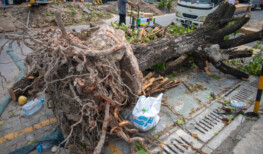


Maldives Signs Coconut Tree Pest Control Agreement with China
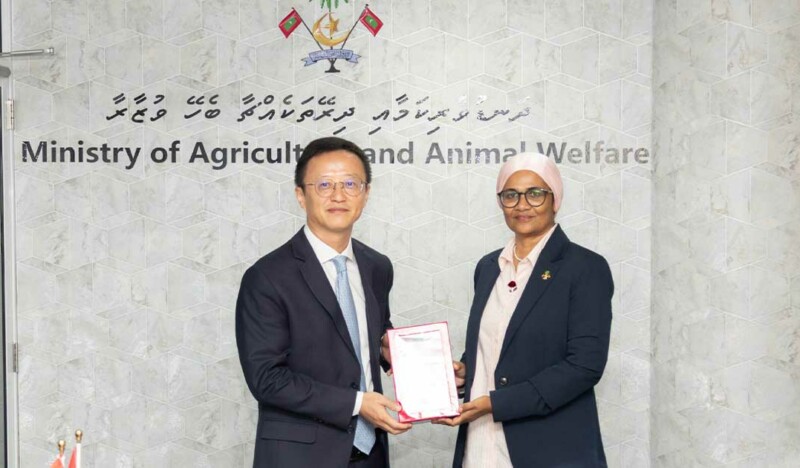
Maldives signs new agreement with China to combat coconut tree pests | Photo: Ministry of Agriculture and Animal Welfare
The Maldives has entered into a new agreement with China aimed at addressing the ongoing coconut tree pest issue affecting the island nation.
Implementation Agreement for the Assistance Project on Coconut Tree Pest Control in the Maldives was signed today between the Ministry of Agriculture and Animal Welfare and the People’s Republic of China. The agreement was signed by the Minister Dr. Maryam Mariya @mmaryambu and… pic.twitter.com/K2dUc5lZbK
— Ministry of Agriculture and Animal Welfare (@MAAWmv) July 14, 2025advertisement
advertisement
advertisement


The Implementation Agreement for the Assistance Project on Coconut Tree Pest Control in the Maldives was signed on Tuesday by the Minister of Agriculture and Animal Welfare, Dr Maryam Mariya, and the Chinese Ambassador to the Maldives, Kong Xianhua.
According to the Ministry, this agreement builds on the broader Agreement on Economic and Technical Cooperation signed between the Maldives and China on 20 September 2019, and follows the exchange of letters between the two governments on 10 January 2024. It is considered a key strategic measure to control the spread of the invasive Coconut Hispid Beetle, which has posed a threat to local coconut palms.
The two-year project is focused on enhancing food security through targeted pest management efforts. It aims to control non-native invasive species that damage coconut trees, which are an important natural and economic resource in the Maldives.
Preparatory work for the project began in December 2023, when an expert team from the Environment and Plant Protection Research Institute of the Chinese Academy of Tropical Agricultural Sciences (CATAS) met with senior officials from the Ministry. The team initiated a site assessment for establishing a Natural Enemy Laboratory at the Hanimaadhoo Agriculture Center, which will serve as a research hub for biological pest control.
The establishment of this facility is considered a vital step towards sustainable pest management. It is expected to support the long-term health and productivity of coconut palms throughout the country.
As part of their technical visit, the CATAS team also collaborated with the Ministry to assess pest control strategies on Maafahi Island in Haa Alifu Atoll. Technical expertise was exchanged regarding insect-pest interactions and protocols for biological control, with a focus on developing a comprehensive pest management programme.
In addition to the bilateral agreement, the Ministry of Agriculture and Animal Welfare has launched a separate four-year National Coconut Tree Rehabilitation Programme. This initiative will involve transferring and planting 160 young coconut palms from the Hanimaadhoo Agriculture Center to various islands to increase the availability of coconuts across the country.