

MP Ibrahim Shujau Proposes Resolution to Reduce Number of Councillors
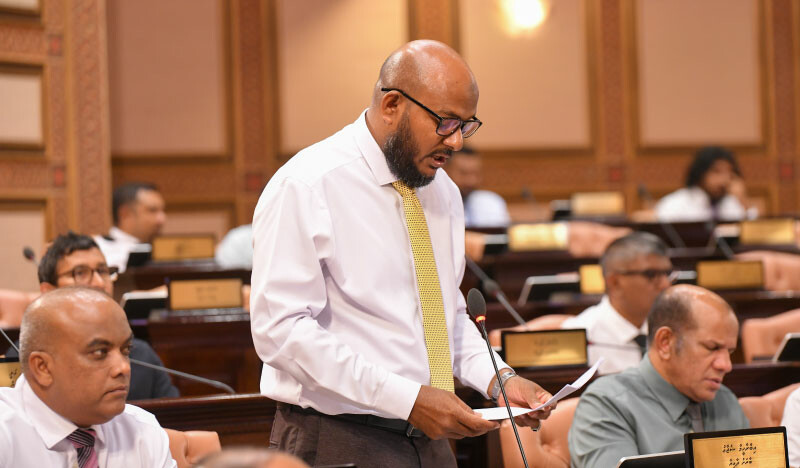
Baarashu MP Ibrahim Shujau. | Photo: People’s Majlis
Baarashu MP Ibrahim Shujau has submitted a resolution to the People’s Majlis seeking opinions from lawmakers on potentially reducing the number of elected councillors in local councils across the Maldives.
Representing the People’s National Congress (PNC), MP Shujau argued that the current requirement of having at least five councillors per island, as mandated by law, places a significant financial burden on the state—especially during a period of high government spending. The resolution aims to gather parliamentary consensus before the government moves forward with any legal amendments.
advertisement

advertisement

advertisement

Highlighting that four council elections have taken place in the past 15 years, resulting in the election of thousands of councillors and billions of Rufiyaa in public expenditure, Shujau claimed that there has been little tangible improvement in local governance or development due to the decentralisation policy.
He further criticised the inefficiencies within the current system, stating, “There needs to be a serious evaluation of whether having five full-time councillors is necessary. Perhaps one or two full-time councillors supported by others who work on a sitting-allowance basis would be a more efficient and cost-effective approach.”
The resolution also criticised opposition-backed councillors for frequently failing to cooperate with the government, resulting in stagnation at the local levels. Shujau noted that past administrations have attempted temporary solutions through legislative amendments but failed to provide long-term fixes.
In the parliamentary session today, the proposal drew strong criticism from opposition members.
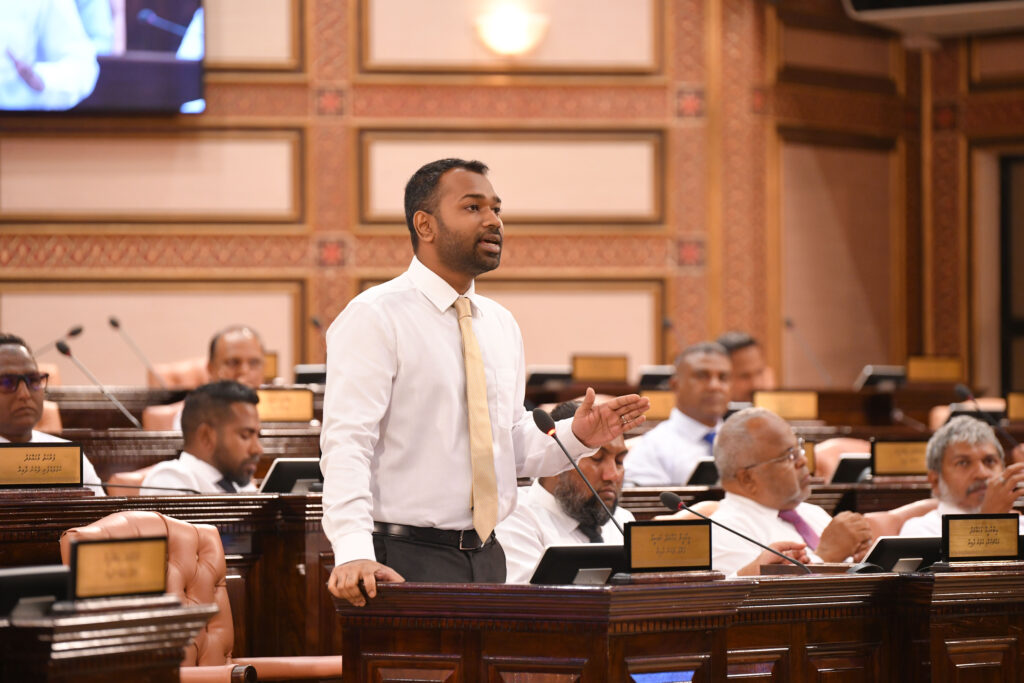
Meekail Ahmed Naseem, MP for South Galolhu, condemned the resolution, stating that decentralisation is not aligned with the ideology of the ruling PNC. He pointed out that the government payroll has grown compared to the previous year, citing an increase in political appointees rather than councillors as a major source of bloated spending.
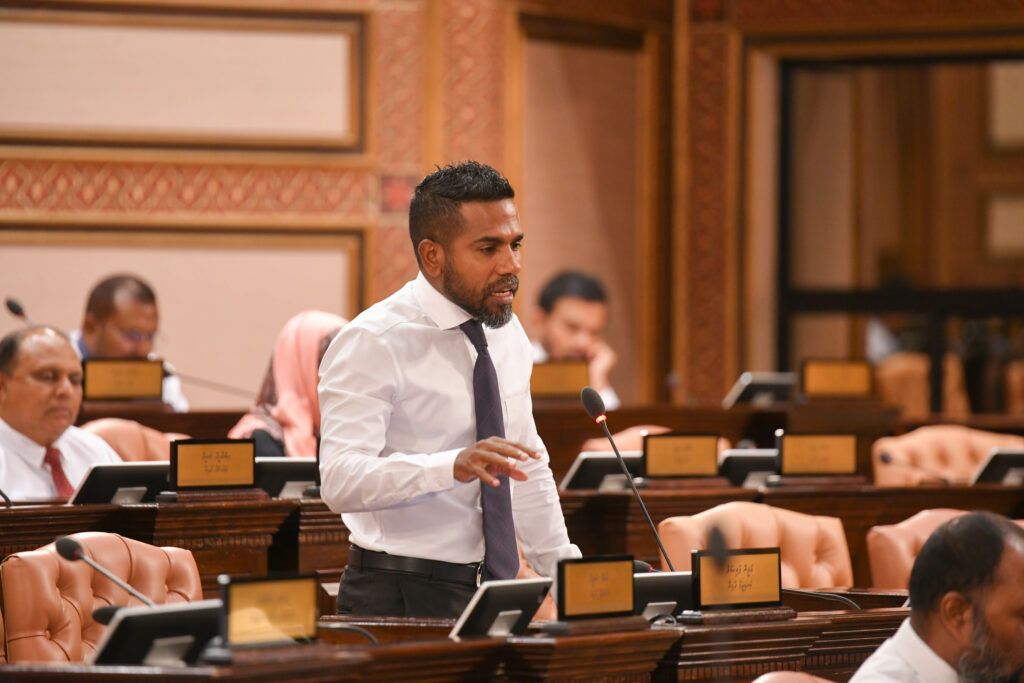
Similarly, MP Ameen Faisal of Kanditheemu criticised the government’s lack of commitment to genuinely reduce expenses. He proposed relocating government offices to existing island spaces instead of continuing to rent private buildings, stating that “the government is unlikely to take such measures because it wants to portray decentralisation as a costly burden.”
Despite the criticism, Shujau maintained that the resolution was aimed at initiating dialogue and exploring more efficient models of local governance. He stated that once studies are complete, the government would propose appropriate legislative amendments to parliament.
The resolution marks a renewed debate over the future of the decentralisation framework in the Maldives, with strong views from both sides of the political spectrum.