

Nasheed Says Maldives Should Fully Float Exchange Rate
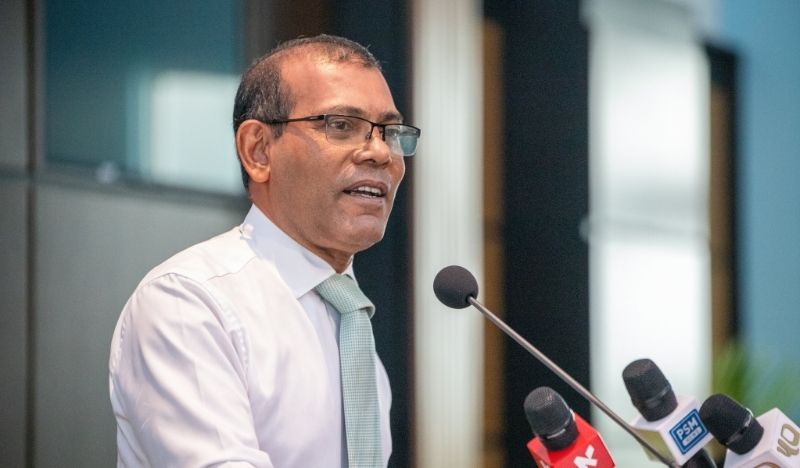
Former President Mohamed Nasheed at the launching ceremony for the first books published by the MNU Book Grant on 11 October, 2022 | Photo: Maldives National University
Former president Mohamed Nasheed has said the Maldives should allow the Dhivehi Rufiyaa to float freely, arguing that the value of the US dollar should be determined by market forces rather than administrative controls.
Nasheed said that even if authorities devalue the rufiyaa and officially set the US dollar at MVR 20, the black market will continue to expand if banks cannot supply dollars at that rate.
“If the banks cannot provide dollars at that rate, the black market will thrive,” he said. He added that the most effective approach would be to fully float the exchange rate and allow supply and demand to establish a fair price.
Dhivehi Rufiya devalue koh, US dollar eh MVR 20/- ah badhalu kurinamaves, e rate gai Bank thakun dollar nulibey nama kalhu baazaaru gadhayah hi’ngaane. Raajje ah rangalhu gothakee exchange rate mulhin float koh, dhookohlun. Dollar ge agakee baazaaruge thabeeathun kanda elhey hama…— Mohamed Nasheed (@MohamedNasheed) February 25, 2026
His remarks come as the US dollar trades at above MVR 20 on the black market, significantly higher than the long-standing official rate of MVR 15.42.
At the start of the current administration, parliament passed government-backed legislation requiring sectors that earn above a specified threshold in US dollars to exchange a portion of those earnings through the Bank of Maldives as part of efforts to address the country’s foreign currency shortage.
Under the regulations, resorts must deposit USD 500 per tourist in a local bank, while guesthouses are required to deposit USD 25 per tourist. The Act also allows Category A resorts to choose between depositing USD 500 per tourist or 20 per cent of their gross monthly income. Similarly, some guesthouses, depending on the number of beds, may opt to deposit either USD 25 per tourist or 20 per cent of their monthly income.
President Mohamed Muizzu has previously said his administration is attempting to mitigate the dollar shortage and stabilise the currency market.
After the exchange law came into effect, several resorts reduced the proportion of salaries paid to employees in US dollars, drawing criticism from workers in the tourism sector.
Despite the new requirements, the rufiyaa’s value against the US dollar on the open market has continued to weaken, rising from MVR 15.42 to above MVR 20.