
No Interest in Controlling the Media, Asserts President Muizzu
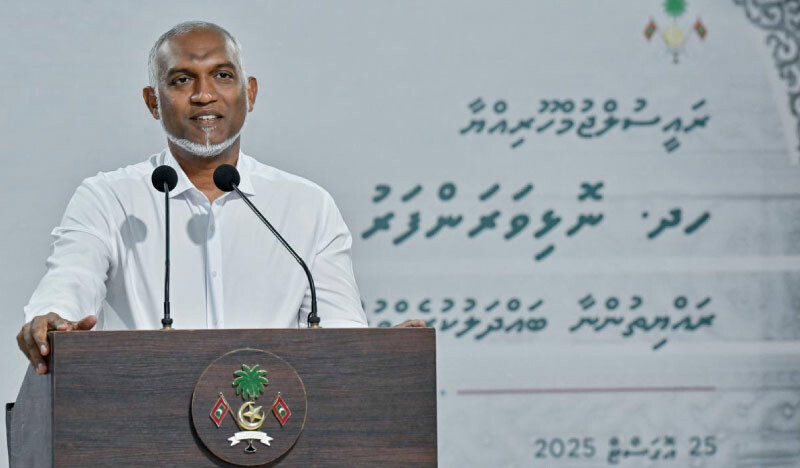
President Dr Mohamed Muizzu speaking at a community meeting in Nolhivaranfaru, Haa Dhaalu Atoll, on August 26, 2025 | Photo: President’s Office
President Dr Mohamed Muizzu said yesterday that he has no intention of controlling the media, stressing that it is neither something he has done nor something he plans to do.
He made the remarks while meeting residents of Nolhivaranfaru, Haa Dhaalu Atoll, during his ongoing tour of the region. The President emphasised that every citizen has a role to play in the nation’s development, adding that political parties, independent organisations and the media also carry responsibilities.
“I have no intention of controlling the media, that is not something I have ever done, nor something I will ever do,” he said.
The President also addressed the “Maldives Media and Broadcasting Regulation” bill, submitted to parliament on 18 August by Thulhaadhoo MP Abdul Hannan Aboobakuru.
“I have been informed that an independent parliamentarian has submitted a bill regarding the media [to the parliament],” he said.
Under the proposed legislation, the Chairperson of the Maldives Media and Broadcasting Commission would be appointed by the President of the Maldives.
Muizzu said he had instructed members of the People’s National Congress (PNC), which holds a supermajority in parliament, to amend the bill to ensure the appointment of the commission’s chairperson is made by its seven members rather than the President. He stressed that the media must remain free from external influence and reaffirmed the need for its independent operation.
This marks the second attempt by MP Abdul Hannan to introduce a media regulation bill, after he withdrew an earlier proposal last November following widespread criticism.
Criticism of the Bill
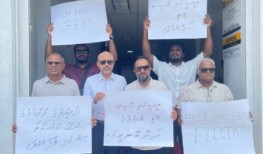
The Maldives Journalists Association (MJA) strongly criticised the current bill, warning that it centralises authority under the President and creates a mechanism for government control of the media. The association described it as “the murder of independent journalism” and cautioned that provisions allowing for outlet closures, journalist arrests, and fines ranging from MVR 5,000 to 25,000 would foster a climate of fear.
The Maldives Media Council (MMC) also condemned the proposal, calling it a “complete overhaul” of the existing self-regulatory system. It accused the Government of attempting to place media under the influence of the ruling party and warned that the bill would dismantle the independent framework currently in place.
The MJA further objected to the lack of consultation with journalists in drafting the legislation, describing the move as politically motivated. The association accused Deputy Speaker Ahmed Nazim of playing a central role in shaping the bill despite it being submitted by an independent MP, calling the process “suspicious” and driven by “ulterior motives.”
The opposition Maldivian Democratic Party (MDP) has also called for the bill’s withdrawal. The party argued that penalising outlets for publishing information would undermine independent journalism and deprive Maldivians of access to free media. It urged MP Abdul Hannan to withdraw the proposal and avoid, in its words, aligning with government efforts to control the press.