


Parliament Passes Controversial Bill to Limit Financial Powers of Councils
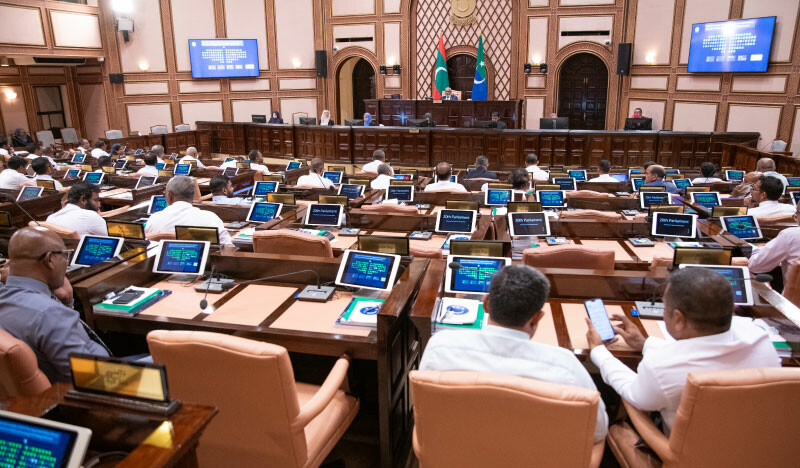
22nd Sitting of second session of 2025 held on 06 August. | Photo: People’s majlis
Parliament has passed a contentious government-sponsored bill amending the Decentralisation Act, aimed at limiting the financial and business powers of local councils—particularly in the final year of their term. The bill was passed in Wednesday’s sitting with 51 votes in favour and 8 against.
The legislation, submitted by South Fuvahmulah MP Ibrahim Hussain, seeks to tighten state oversight and establish clearer boundaries on economic decisions made by councils. Among its key provisions, the bill prohibits councils with one year or less remaining in their term from hiring permanent or contract staff or engaging in significant financial transactions such as leasing or granting land, lagoons, and islands—unless such actions meet standards set by the Ministry of Finance and the Local Government Authority (LGA).
advertisement

advertisement

advertisement

The stated aim is to ensure accountability and prevent outgoing councils from making decisions that could bind their successors.
During the debate, Vaikaradhoo MP Hussain Ziyad, a member of the opposition Maldivian Democratic Party (MDP), criticised the process, stating that Parliament gave less than 24 hours to gather public comment. “Despite the limited time, many councils and stakeholders submitted comments, but the Decentralisation Committee disregarded them and passed the bill without proper consideration,” he said. Ziyad also argued that the restrictions should not be limited to local councils but should apply during all election years, including presidential and parliamentary cycles.

In response, ruling People’s National Congress (PNC) Parliamentary Group Leader Ibrahim Falah questioned the MDP’s opposition, noting that most councils are dominated by members from the ruling coalition. “The majority of councillors belong to PNC. We would not introduce anything that harms our own people,” Falah said. He also predicted a sweeping win for his party in the next local council elections, claiming they would secure 80 percent of the seats.

The bill also places limits on the business activities of companies established by local councils. These entities will only be allowed to pursue projects not already undertaken by private businesses within the same jurisdiction, and only if the projects are deemed essential for infrastructure development and involve investment or raw material costs exceeding MVR 10 million. Companies found in violation will be required to cease non-compliant operations within 90 days of the bill’s enactment.
Other provisions include a ban on collecting rent from land or buildings leased for providing basic public services. Councils will also be required to manage their finances in accordance with regulations issued by the Finance Ministry and provide financial statements upon request.
Although the bill was reviewed by the Parliament’s Decentralisation Committee, only minor amendments were made before it was brought to the floor for a final vote.
The bill has drawn criticism from the opposition, civil society organisations, and several councils, all of whom urged the government to withdraw the proposed changes. Former President Ibrahim Mohamed Solih warned that the amendments would reverse the gains made through decentralisation reforms and negatively impact island communities.