


Parliament Passes Organ Transplant Bill Regulating Live Donations
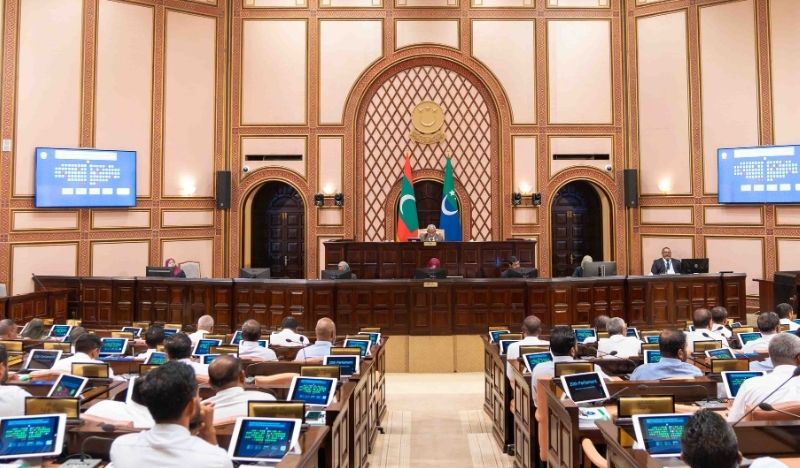
Parliament meeting on May 14, 2026 | Photo: Parliament
The parliament on Thursday passed legislation aimed at regulating organ donation and transplantation in the country, establishing a legal framework intended to ensure safe and ethical transplant practices.
The bill, proposed by the government, was approved with 68 votes. According to the legislation, its purpose is to create a regulated system for organ transplantation that is safe, lawful and accessible to all citizens, while also protecting the rights of donors and recipients and preventing the sale or exploitation of human organs.
advertisement

The law includes provisions covering the foundations of organ transplantation, donor and recipient rights, operational standards, offences and penalties, as well as the establishment of an Organ Transplant Council and an Organ Transplant Organisation Committee.
Under the legislation, only living organ donations between living individuals will be permitted. Organ donations from deceased persons will not be allowed. In many other countries, however, deceased donation systems enable individuals to consent to organ donation after death.
The bill limits donations to organs that occur in pairs, such as kidneys, lungs and eyes, or organs capable of regeneration following partial removal. The donation of reproductive organs, including ovaries and testicles, remains prohibited.
To qualify as donors, individuals must be Maldivian citizens aged 18 or older, mentally competent, fully informed of the medical risks involved, and neither in state custody nor serving a criminal sentence. Exceptions may be made for foreign nationals donating organs to immediate family members, including parents, children, grandparents, grandchildren and siblings.
The legislation also gives priority to organ donations between family members. Within 60 days of the law coming into force, the Ministry of Health must establish an Organ Transplant Committee tasked with approving domestic organ donations.
The bill introduces penalties aimed at preventing unethical practices. Procuring organs without donor consent will be treated as a criminal offence punishable by fines ranging from MVR 150,000 to MVR 250,000 and prison sentences of between 12 and 18 months.
Healthcare providers and institutions found complicit in such offences could face fines of up to MVR 1.5 million and imprisonment of up to 24 months.
The sale and purchase of human organs for transplantation purposes are explicitly prohibited under the new law.