

Parliamentary Committee Overhauls Quorum Rules for Presidential Impeachment
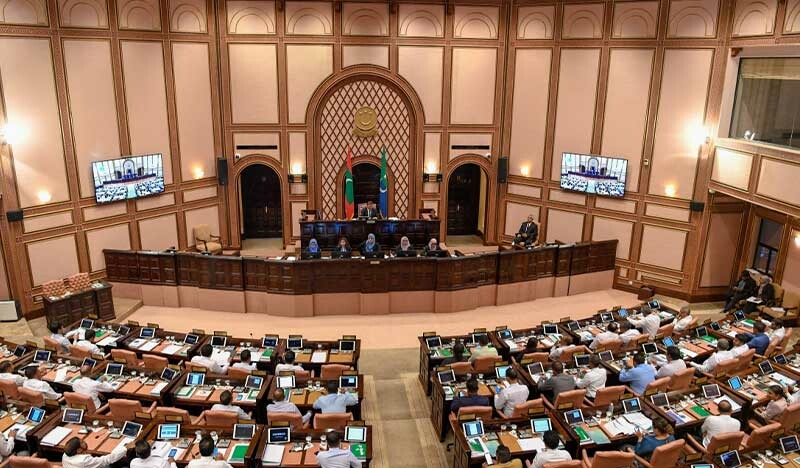
Photo: People’s Majilis
The parliamentary committee made significant revisions to the controversial amendments concerning the parliament’s rules of procedure, specifically addressing the threshold for impeaching the President or Vice-President with less than the constitutionally mandated number of lawmakers present in parliament.
Under constitutional provisions, the removal of the president or vice-president requires the support of two-thirds of the total votes in parliament, which currently stands at 87 members.
advertisement
advertisement
advertisement

However, following the recent presidential elections, several lawmakers from the ruling PPM/PNC resigned to assume senior government positions. This resulted in vacant seats in parliament, with insufficient time to conduct by-elections to fill them before the next parliamentary session.
In response, the main opposition party, MDP, which holds a majority in parliament, proposed an amendment to the rules of procedure, advocating for the counting of sitting members present in parliament at the time of voting.
Attorney General Ahmed Usham initiated a constitutional case in the Supreme Court on 28 December, seeking to invalidate the amendments.
Following the scheduling of the initial hearing for February 25, the parliamentary general purposes committee convened on Thursday to address the contentious issue. During this session, the committee opted to nullify the disputed amendments.
Instead, the committee introduced a new provision to the parliament’s rules of procedure. This provision stipulates that in instances where there is insufficient time to hold a by-election to fill a vacant seat, the total strength of the parliament will disregard these vacancies.
The revisions aim to clarify the procedures regarding quorum counts in light of recent political developments, ensuring adherence to constitutional requirements while addressing practical challenges arising from the timing of elections and vacancies in parliament.