

RCG Raises Legitimacy Concerns Over Planned Referendum
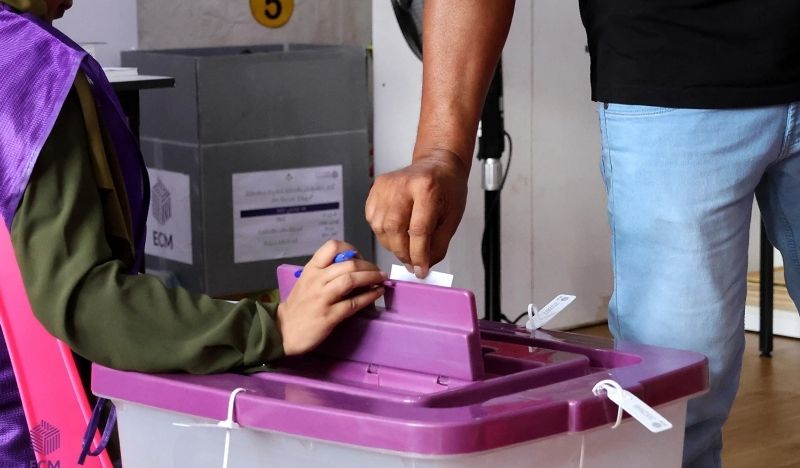
A person casting their vote in the by-election held on February 8, 2025 | Photo: Election’s Commission of Maldives
The Raajje Coalition for Good Governance (RCG) has raised serious concerns over the legitimacy of the process leading up to the planned national referendum, citing failures in due process, limited public participation, and unresolved legal challenges.
In a joint statement issued with the Association for Democracy in the Maldives, Save Maldives, Mental Health Support Group, Zero Waste Maldives, and Transparency Maldives, RCG said multiple factors surrounding the conduct of the referendum by the Elections Commission of the Maldives (ECM) have given rise to “grave concern.” The referendum is scheduled to be held alongside the upcoming Local Council and Women’s Development Committee (WDC) elections this Saturday.
According to RCG, constitutional challenges to the referendum remain pending before the courts, raising further questions over the process. Cases questioning the legality of the referendum have been filed at the Civil Court, High Court, and the Supreme Court, with at least one case yet to be adjudicated.
RCG stated that the proposed amendment seeks to combine two distinct constitutional changes—holding Presidential and People’s Majlis elections concurrently, and altering the parliamentary term. If passed, the amendment would bring a premature end to the current Majlis term on 30 November 2028.
The coalition also criticised what it described as a broader pattern of constitutional amendments being passed without adequate public consultation, noting that eight amendments have been enacted over the past 15 years. RCG highlighted the Eighth Amendment in particular, stating it was introduced during an extraordinary parliamentary session with less than 24 hours’ notice and debated for under three hours.
RCG further expressed concern over the timeframe for the referendum, pointing to Section 19 of the Public Referendum Act, which allows between 45 and 90 days between announcement and polling. The coalition said this period is insufficient to ensure meaningful public awareness, inclusive consultation, and informed debate on issues of national importance.
Referencing the Maldives’ obligations under the International Covenant on Civil and Political Rights (ICCPR), RCG said the current process risks undermining citizens’ right to participate in public affairs.
The coalition also raised concerns about the role of the judiciary, alleging that recent actions appear to favour the executive rather than provide impartial remedies. According to RCG, some cases have been dismissed on administrative grounds, while others have been rejected or decided after a single hearing. One case filed at the High Court by lawyer Mariyam Shunana—arguing that the ECM failed to provide sufficient explanation on the purpose of the referendum—remains pending registration.
RCG further expressed unease over changes to the composition of the Supreme Court in 2025, describing the circumstances as “dubious and highly challenged.” Since then, the coalition said court processes have become less transparent, with inconsistent handling of cases.
RCG warned that the cumulative effect of these issues risks undermining democratic norms and could have lasting consequences for fundamental rights and civil liberties in the Maldives.