

Report: The Need for a Dedicated Parliamentary Seat for Dhaftharu Registry
Statistics indicate that there are more than 10,000 individuals on the Dhaftharu registry, but they do not belong to a specific constituency. They reside in various locations. For parliamentary and council elections, these citizens are distributed among different constituencies.
To put it differently, these individuals effectively serve as placeholders, and as a result, many citizens believe that they are not receiving sufficient representation in the parliament. Additionally, there have been complaints about the absence of a fixed island or residence for them.
In anticipation of the upcoming parliamentary elections next year, there is a growing advocacy for improved representation of Dhaftharu registered people. Furthermore, certain Members of Parliament (MPs) have raised this concern as well.
No Representation for Dhafthar Citizens
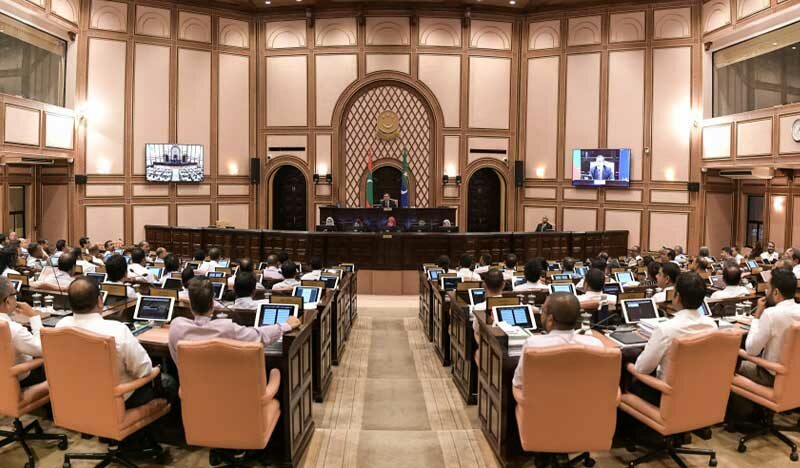
Discussing the bill proposed by The Democrats aimed at altering the composition of the parliament, Kendhoo MP Ali Hussain emphasised the lack of parliamentary representation of individuals on the Dhaftharu registry from Male’ city. He suggested the need for a dedicated parliamentary seat to address this issue.
It’s important to note that the registered individuals not only lack representation in the parliament but have also been excluded from certain government policies and activities specific to the Male’ area. In essence, they are merely included in the voting list.
One example of this exclusion is the government’s distribution of free land plots in the Male’ area, which didn’t include Dhaftharu registered people, despite their long-standing residence in Male’ city.
During the parliamentary debate, Ali Hussain pointed out that the individuals on the Male’ city Dhaftharu registry are often used to exert influence during government elections.
He expressed concern that there is no representative to voice the interests of the Dhaftharu registered people in such matters. These individuals are particularly vulnerable to housing problems, and their concerns often go unheard in Parliament due to lack of representation.
Ali Hussain and some legal experts share the belief that there is no necessity to amend the Constitution or existing laws to allocate a special seat for Dhaftharu registered people. They propose that the Election Commission of Maldives (ECM), with its authority to determine constituencies, can address this issue.
Ali Hussain emphasised the urgency of the matter, proposing the creation of specific constituencies such as Male’ Register Constituency 1, Male’ Register Constituency 2, and Male’ Register Constituency 3 to address the issue promptly.
More and More Seats for the Coming Parliament
The ECM has made adjustments to the constituencies in preparation for the upcoming parliamentary elections next year to add more seats for the growing population. While the current number of seats is 87, the coming parliament is set to increase to 93 seats.
Under the new green constitution in 2009, the number of seats stood at 77, which then increased to 85 in 2014, and then increased again to 87 later in 2014.
Over the course of these five years, significant changes in population distribution have occurred, resulting in the addition of six new constituencies to the parliament. Among these, two constituencies were specifically introduced in Male’.
Notably, the 9,653 individuals on the Dhaftharu register are distributed across five out of the 17 constituencies of Male’, most of whom landed in the new constituency of North Hulhumale’, which equates to 3,715 people. The second most number of people landed in South Hulhumale’ constituency, which is 2,918 people.
The remaining individuals are allocated to the constituencies of Mahchangoalhi North, Maafannu South, and Villimale’.
The ongoing increase of parliament members has prompted The Democrats to propose the inclusion of only 55 elected constituencies in the parliament. This adjustment is aimed at alleviating the strain on the State and addressing issues arising from the increasing number of MPs in each term. Additionally, the proposal entails two members to represent persons with disabilities and the appointment of 11 members by political parties in proportion to their votes.
However, there is a significant amount of disagreement regarding this proposal, and it appears unlikely that the bill will be approved. The majority party in the parliament, the Maldivian Democratic Party (MDP), is not in favour of the bill. MDP MPs have advocated for maintaining the current number of MPs, but it’s improbable that any changes will be made before the upcoming parliamentary elections.
While the bill did not secure passage, there is a likelihood of constituencies undergoing changes as the ECM report regarding constituency determination is currently under debate in parliament. Ensuring that the voices of the registered people are heard during this discussion is crucial.
There is a notable demand from the registered individuals to find a means of separate representation in the constituency distribution. The call for this has been loud. Even if no constitutional amendments are made, as suggested by Ali Hussain, it is likely that a special seat will be designated for the registered people of the city.