

SIFCO Faces Scrutiny Over No-Bid Housing Contract, Financial Irregularities
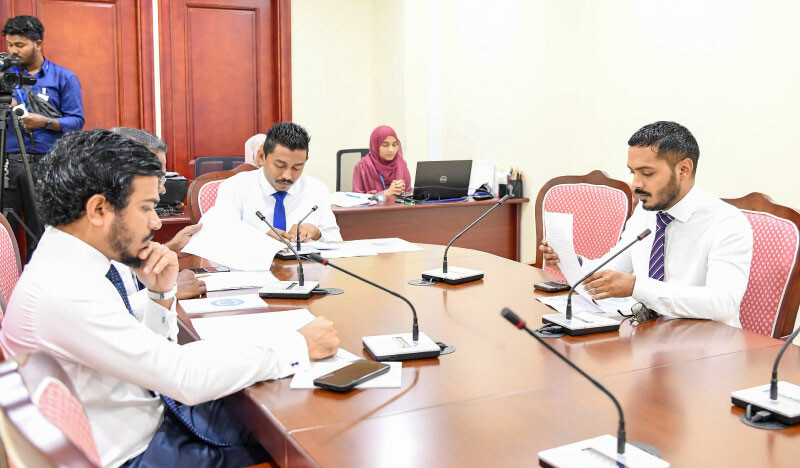
Sub Committee of Public Accounts Committee. | Photo: People’s majlis
An audit has revealed that the construction of the SIFCO flats was awarded to Noomadi at the direct request of the government and the leadership of the Maldives National Defence Force (MNDF), without competitive bidding and standard procurement procedures.
Details of the Auditor General’s report were presented yesterday at a sitting of the Public Accounts Committee’s subcommittee. The findings show that SIFCO, the MNDF’s welfare company, awarded the housing project to Noomadi without inviting proposals from other firms, comparing prices, or seeking competitive offers. According to SIFCO’s management board, the decision was made on the instructions of the MNDF leadership, who described the project as “highly advantageous” for the armed forces. The report also noted that SIFCO operates without a formal procurement policy.
advertisement

advertisement

advertisement
The contract, signed on 28 March 2014, required Noomadi to build 300 housing units across three towers. However, work began only in October 2015—more than a year later—and did not follow the agreed schedule. The audit stated that payment delays cited by Noomadi as the cause of the slowdown were unreasonable. By November 2019, SIFCO had paid MVR 125.93 million of the MVR 191.4 million down payment, yet construction remained incomplete. The report found that MVR 89.5 million was paid without any construction progress, and no review committee was formed to monitor the work.
The advance payment was issued without a guarantor. When progress stalled, the contract was terminated, and Noomadi agreed to return MVR 92.5 million in instalments between September 2016 and March 2017. The repayment was recovered through a settlement signed in August 2019, after which the Finance Ministry declared in April 2021 that no payments were owed by either party. The remaining construction was later completed by a Chinese company.
The report also examined SIFCO’s other operations, highlighting multiple shortcomings:
- Food services at Bandaarakoshi: Since September 2013, SIFCO has been responsible for preparing meals for MNDF personnel. Purchases of food items, including vegetables, fruits, and seafood, were made in cash by an MNDF employee. Between September 2013 and June 2015, over MVR 18.5 million was spent, with the audit noting that guidelines to ensure the best prices were not followed.
- Mess room cleaning contract: SIFCO hired a company without a public tender or cost comparison. Between October 2013 and June 2015, MVR 2.5 million was paid based on invoices, without verifying that the agreed staffing levels were met.
- Fireworks events: Between October and December 2014, fireworks shows generated MVR 3.03 million, with half going to SIFCO and half to a Chinese company. No competitive bidding process was conducted, and market rates were not considered.
- SENEHIYA Hospital: The facility, under the Ministry of Defence, was transferred to SIFCO in March 2012 without official documentation of the assets. Despite making a profit from the hospital in 2014, SIFCO’s electricity and water bills—totalling MVR 1.8 million—were paid from the MNDF budget until the cooperative began covering the costs in January 2015.
- Retail, café, and loan scheme irregularities: The audit reported discrepancies in the accounts of SIFCO’s retail and café business. It also found that loans were disbursed to employees before documentation was completed—MVR 162,000 was issued before confirmation of a loan in 2014, and MVR 332,000 was disbursed without full paperwork the same year.
The subcommittee has decided to summon SIFCO’s management for further clarification before forwarding the report to the main Public Accounts Committee.