

Sports Minister Calls for Significant Budget Allocation to Resolve Project Stalls
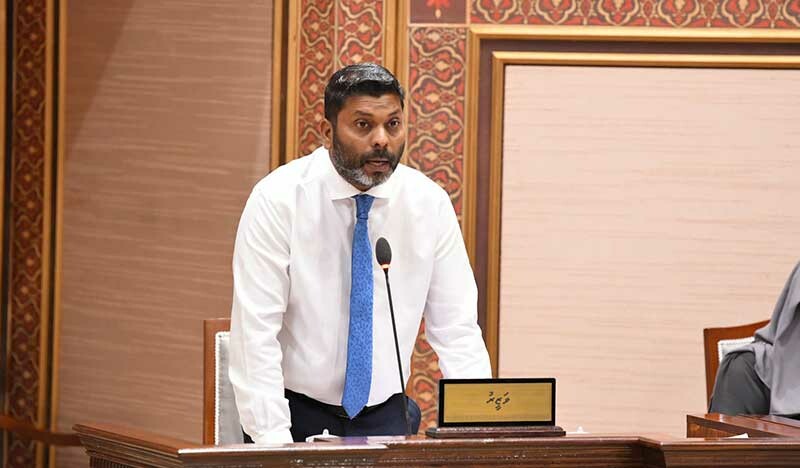
Minister of Sports, Fitness and Recreation Abdulla Rafiu has urged lawmakers to allocate 50 per cent of a project’s total cost in the state budget for the upcoming year, aiming to tackle the issue of stalled and delayed projects.
His appeal was made during a parliamentary questioning session today. In response to a query from South Maafannu MP Abdulla Rifau about resolving delays in project execution, Minister Rafiu suggested that one effective solution would be to allocate significant portions of the project’s cost in the budget. He argued that this approach would ensure projects are completed within a maximum of two years.
advertisement

advertisement

advertisement

Additionally, Minister Rafiu highlighted the need to prioritise projects based on their importance to local communities, as identified by local councils and parliamentary representatives. This prioritisation would enable the division of projects over several years, ensuring that those essential for 2025 and 2026 receive adequate funding.
In May, Rafiu had previously noted that many projects were stalled due to inadequate budget allocations, which hampered the government’s ability to make the necessary payments to contractors. He cited this as a key reason for the delays.
The main opposition Maldivian Democratic Party (MDP) has criticised the current administration for delays in projects initiated by the former MDP government. The current administration has, however, reaffirmed its commitment to completing these projects.
Minister Rafiu reported that the cost of ongoing sports projects exceeds the total budget allocation for the next two years. Speaking to Parliament, Rafiu explained that the value of these projects surpasses available funds, creating significant challenges.
The minister announced plans to engage with local councils to determine project priorities and expressed hopes of initiating additional projects later in the year. He reiterated concerns about the mismatch between project costs and budget allocations, highlighting instances where budgets were insufficient or disproportionately high.
Rafiu’s comments reflect ongoing issues with project funding and execution, underlining the need for a more strategic approach to budgeting and project management.