

Towers in the Trees: Vilimalé’s Funa Vaa at the Heart of a Housing Debate
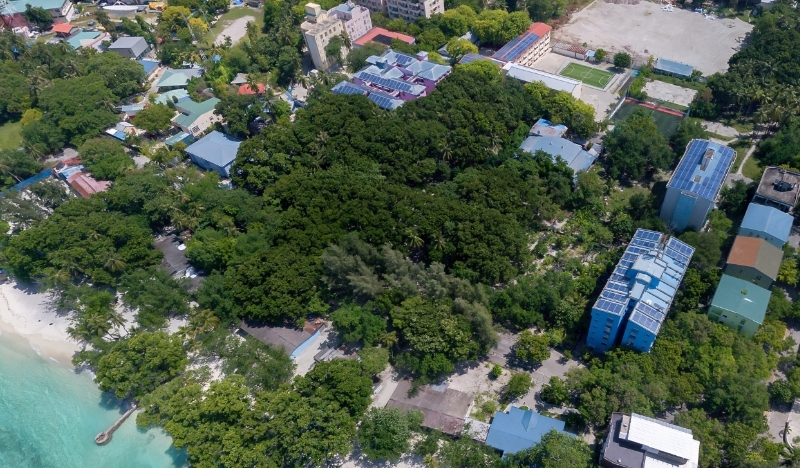
Aerial view of the Vilimale Funa Vaa area. | Photo: Maldives Virtual Tour
In Vilimale, long known as a quiet, tree-lined escape from the congestion of the capital, a patch of dense greenery known locally as “Funa Vaa” has become the unlikely centre of a growing dispute, pitting plans for new housing against the expectations of those who come to the island for its shade, space, and calm.
The project, which broke ground last Thursday, will see the construction of 300 housing units across three towers by Rasheed Construction and Carpentry (RCC), under the Bank of Maldives Affordable Home Leasing scheme. Each unit will consist of three-bedroom apartments measuring approximately 900 square feet, forming part of a broader policy to deliver 3,260 housing units across Hulhumalé and Vilimalé.
ސަރުކާރުގެ "ބޯހިޔާވަހިކަން އެންމެންނަށް" މި ސިޔާސަތުގެ ދަށުން ވިލިމާލޭގައި ޢިމާރާތްކުރާ 300 ހައުސިންގ ޔުނިޓުގެ ޢަމަލީ މަސައްކަތް ފަށައިފިއެވެ.
ބޭންކް އޮފް މޯލްޑިވްސްގެ ސަބްސިޑަރީ ކުންފުންޏެއް ކަމަށްވާ "ބީއެމްއެލް އެފޯޑަބަލް ހޯމް ލީސިންގ ޕްރައިވެޓް ލިމިޓެޑް" އިން ހިންގާ މި… pic.twitter.com/nbR40dkpcn— Ministry of Construction, Housing & Infrastructure (@MoCImv) March 26, 2026
With a population of around 2,900 based on 2022 census figures—now believed to be declining due to relocation to social housing in Hulhumalé—the project is positioned as part of efforts to address housing needs on the island.
At the centre of the controversy is an area locally known as “Funa Vaa,” a belt of Alexandrian Laurel trees that forms one of the island’s most recognisable green spaces. The site has become a focal point of environmental and political debate, with volunteers from the Save Maldives Campaign raising concerns over the impact of development on public access and natural ecosystems.
During a protest held on Friday in front of the Vilimalé ferry terminal, activists said the project threatens to permanently alter one of the island’s remaining forested areas. Demonstrators later moved toward the Funa Vaa site in a coordinated relay-style protest.
Humaida Abdul Qafoor (Humay), an avid environmental activist and a volunteer with the Save Maldives Campaign, said the demonstration was organised in response to what she described as increasing encroachment on public spaces.
“Citizens have organised themselves because the government is carrying out actions that include public spaces in a way that denies public access,” stated Humay, arguing that such areas are widely used not only by residents but also by people from nearby Malé and Hulhumalé.
She alleged that tensions escalated during the protest when a group of individuals, whom she believed to be politically affiliated, confronted demonstrators near the Funa Vaa area.
“They had a pickup truck and a loudspeaker. There were some altercations; they snatched the posters from our hands and became physically aggressive,” she said, adding that the group later followed protesters to the beach.
Humay also questioned assurances that the development would not harm the island’s greenery, arguing that large-scale construction would inevitably impact the environment.
“Our point is that there is no way they can build those towers without permanently damaging the island’s greenery,” she said, adding that the issue extends beyond local concerns to broader environmental and climate implications.
A rally attendee, who is not from Vilimalé, said he joined the protest after seeing calls online and estimated that around 10 to 15 people participated throughout the day.
He described a similar sequence of events, saying demonstrators were followed and confronted by another group after approaching the trees.
“They shouted that we were against development and housing. They got physically aggressive, snatched our signs, and chased us back toward the ferry terminal,” he said, adding that police presence appeared limited despite the protest taking place near a police station.
However, perspectives from within Vilimalé itself appear more divided. A resident of the island, who requested anonymity, said that while environmental protection is important, housing remains a pressing need.
“We need flats; people need housing,” he said, noting that previous instances of tree removal on the island had not drawn similar levels of public concern.
He pointed to earlier developments, including the installation of infrastructure and recreational facilities, where significant vegetation was cleared without widespread backlash.
“When those trees were cut, no one cared. But now that they want to cut trees for housing, it’s suddenly an issue,” he said, arguing that much of the current opposition comes from non-residents who visit the island.
He added that the proposed site is not a primary recreational area for most visitors and that development could proceed without significantly affecting the island’s appeal.
The developer has pledged that no Alexandrian Laurel trees at the site will be felled, with Chairman Mohamed Nazim stating during the project’s groundbreaking ceremony that construction would proceed without removing any Funa trees. However, scepticism remains among activists who question the feasibility of such assurances.
The dispute reflects a broader pattern of tensions between development and environmental preservation in the Maldives. In recent months, similar controversies have emerged, including the removal of century-old banyan trees in Vilimalé following a public vote and debates over land reclamation projects in ecologically sensitive areas.
For many observers, the Vilimalé case highlights a growing divide between those advocating for environmental protection and those prioritising housing and infrastructure—often along the lines of who uses the space versus who lives there.
As the project moves forward, the challenge remains balancing the need for social housing with the preservation of one of the island’s defining natural spaces.